How much to plaster a ceiling is a common question, and the average cost is around £390 for an average room, with the job usually taking one day. Plasterers price ceilings per room or per job, and they often quote for them separately from walls because the work is heavier and physically demanding.
Why ceilings are priced separately
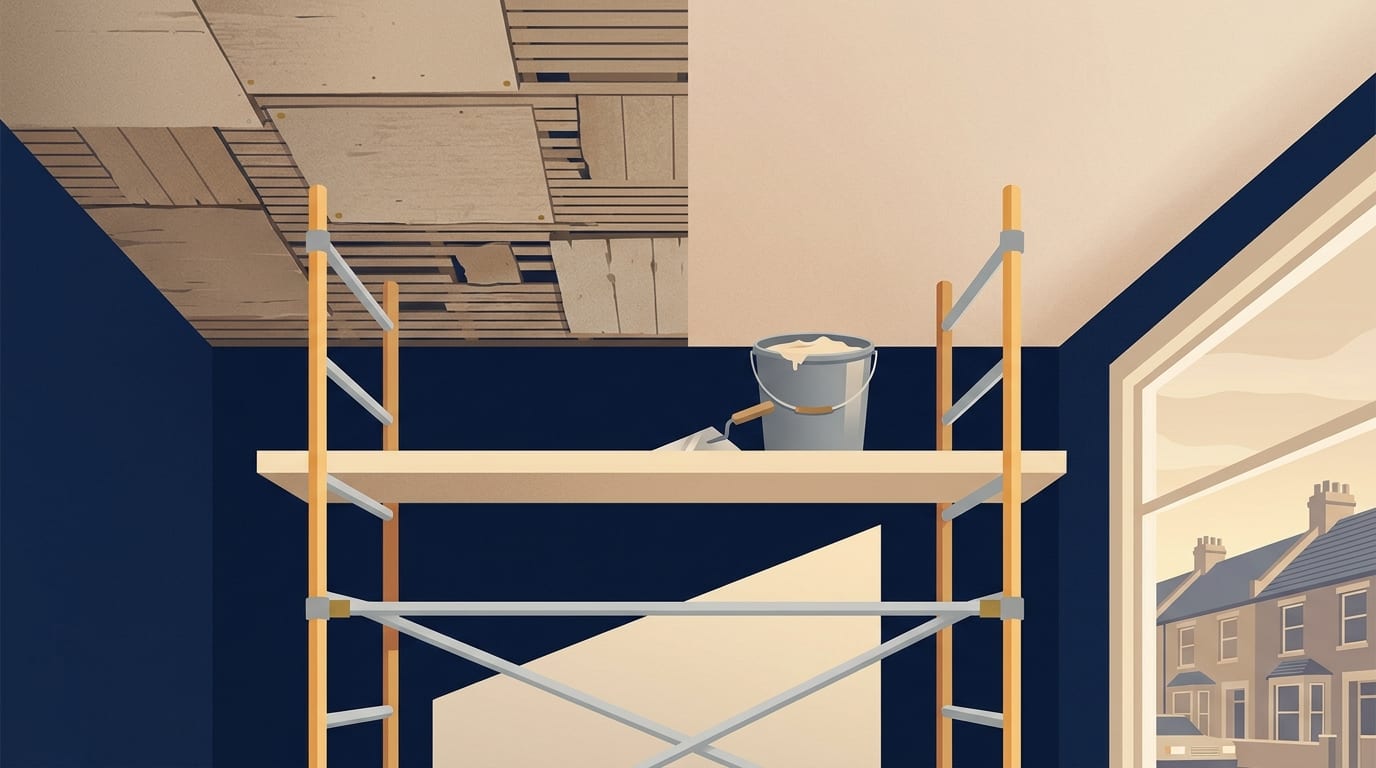
Plastering a ceiling means working at height and fighting gravity. It is harder on the arms and shoulders than skimming a wall. This extra physical effort is why a plasterer's day rate often reflects the difficulty of the task.
General plastering work carries a day rate of around £170, but this can rise to £230 for ceilings. Plasterers price per job only after seeing it in person. They base their quote on the ceiling area in square metres, the ceiling height, how easy it is to reach, and the amount of preparation required.
Preparation is a major factor in the price. It might include stripping old wallpaper, removing loose or blown plaster, sealing painted surfaces so the new plaster adheres properly, or dealing with an old textured finish like Artex. Small jobs usually carry a minimum charge.
Your location also plays a significant role in the final price. Labour costs are higher in London and the South East. In these areas, a ceiling skim for an average room is quoted at £320 to £580, compared with £250 to £450 in the rest of the UK.
Typical ceiling prices by room size
When a ceiling needs a completely new surface, plasterers will either fix new plasterboard or apply wet plaster directly to the background.
This table shows typical costs for a full ceiling replaster using either new plasterboard or wet plaster.
|
Room size |
Plasterboard |
Wet plaster |
|---|---|---|
|
Small (up to 10m2) |
£240 to £380 |
£280 to £450 |
|
Medium (around 15m2) |
£360 to £520 |
£420 to £620 |
|
Large (around 25m2) |
£550 to £780 |
£650 to £950 |
These are typical published prices for 2026, and local quotes will differ based on the state of your ceiling.
Prices for a full replaster range from £240 for a small plasterboard ceiling up to £950 for a large wet plastered ceiling. A full ceiling replacement, where the old ceiling is completely removed and replaced, costs between £400 and £1,000. For large or complicated spaces, a ceiling-only job can reach up to £1,050.
If you only need a small patch and repair to fix a hole or a water stain, expect to pay £150 to £200. Across all these jobs, materials usually make up about 30 to 40 per cent of the total bill.
Skim, overboard or replaster
You have three main choices when dealing with a tired ceiling. The right choice depends entirely on the condition of the surface.
A skim is a thin finishing coat, a few millimetres thick, applied over sound plaster or plasterboard. It leaves a smooth surface ready for decorating. You must only skim over a ceiling that is secure, flat, and in good condition. If you are unsure which option you need, read the guide on whether to get skim plastering or a full replaster.
If the old ceiling is poor, cracked or sagging, have a plasterer look at it, because overboarding may be an option. Overboarding means new plasterboard is fixed under the old ceiling and then skimmed, which avoids taking the old ceiling down. Price guides put overboarding a ceiling plus a skim at £30 to £45 per square metre, or £350 to £650 per room.
A full replaster is required when the existing surface has failed completely and cannot support new boards. A replaster means hacking off the failed plaster and applying a backing coat plus a finish coat, or fixing new plasterboard and skimming it, which is known in the trade as a board and skim.
Older houses often feature lath and plaster ceilings, which consist of lime plaster spread over thin timber laths. This is a specialist case. Conservation bodies advise repairing original lime plaster where possible and replacing like for like. Modern gypsum or cement on old lime walls or ceilings is a common cause of problems.
Skimming costs and timescales
If your existing ceiling is flat and securely attached, a simple skim coat is often enough to hide minor imperfections. Skimming sits at the lower end of the £18 to £45 per square metre range for ceiling work, and ceiling skims outside London are quoted at £20 to £35 per square metre.
If your ceiling is sound, this table shows the cost and time to apply a skim coat.
|
Room size |
Cost |
Timescale |
|---|---|---|
|
Small (up to 10m2) |
£200 to £350 |
0.5 to 1 day |
|
Medium (around 15m2) |
£280 to £440 |
1 to 2 days |
|
Large (around 25m2) |
£425 to £575 |
1.5 to 2 days |
These are typical published prices for 2026, and your final quote will depend on your location and plasterer.
As rough guide ranges, a bedroom-size ceiling skim runs from £200 to £450 and a larger living-room ceiling skim from £350 to £600.
The success of a skim coat relies heavily on the background preparation. Skimming over loose, damp or unsealed painted surfaces is a common cause of failure, meaning the new coat can crack or peel away from the ceiling. A skilled plasterer will check the surface and use a suitable sealing treatment if the ceiling has been painted.
Artex and old textured ceilings
Many UK homes have ceilings covered in Artex or similar textured finishes. Dealing with these requires caution because textured coatings in buildings built or refurbished before 2000 may contain asbestos.
The Health and Safety Executive (HSE) states that asbestos may be part of any commercial or domestic building which was built or refurbished before the year 2000. Homeowners should not sand, scrape or drill suspect coatings themselves. You must tell tradespeople about these coatings before any work starts.
Work on textured coatings is classed as low-risk and does not normally need a licensed contractor. However, the workers doing the job must be trained to recognise and work safely with asbestos. Dry sanding or scraping Artex is a serious health risk and an example of what goes wrong on poorly planned jobs.
As rough guide figures, an Artex skim-over runs from £200 to £450 per room and Artex removal (asbestos-free) plus a skim from £400 to £800 per room. Skimming an average room of Artex is also quoted at around £300 to £350, and Artex removal is listed as a possible extra at around £1,500. The figures vary widely. A plasterer must see the ceiling in person to price this work accurately and decide whether to remove, cover or leave it.
What else affects the price
Beyond the size of the room and the type of plastering, several other factors push the final price up or down. Extras such as furniture moving, erecting a scaffold tower for high ceilings, or arranging waste removal will increase the bill. Always check whether VAT is included in the final figure.
Common causes of unexpected costs and failed jobs include:
- Quotes that omit preparation, ceilings, scaffolding, or waste removal.
- Cash-only deals with nothing in writing to prove what was agreed.
- Skimming over loose, damp, or unsealed painted surfaces, causing the new coat to crack or peel.
- Dry sanding or scraping Artex without checking for asbestos.
- Applying modern gypsum or cement on old lime walls or ceilings.
Knowing your consumer rights and how to handle quotes will protect you from poor workmanship and inflated bills. A quote is a fixed price you can rely on, whereas an estimate is just a rough guess. Citizens Advice suggests getting three written quotes and a written contract before work begins. They advise paying deposits of no more than 25 per cent and paying by card if you can. Depending on how and where you agree to the work, you might also be able to cancel within 14 days of agreeing a contract.
Under the Consumer Rights Act 2015, all work must be done with reasonable care and skill. If it is not, the customer can ask for it to be put right or seek a partial or full refund. If you encounter a dispute with a tradesperson, Citizens Advice is the best place to start.
The legal status of your property also matters. Listed buildings need consent for any significant work, inside or out. Building regulations may also apply to major renovations. Where 25 per cent or more of an external wall is re-rendered, re-plastered or re-lined internally, the regulations normally apply and the wall's insulation would normally have to be improved.
When hiring a tradesperson, remember that plastering is not a licensed trade. There is no legal register like the one for gas engineers, so evidence of past work matters greatly. A CSCS card is for construction sites, not proof of quality on domestic work. The FIS is the trade body for the finishes and interiors sector, and TrustMark is the government-endorsed quality scheme. Finally, a trader who carries waste must be a registered waste carrier, and this register is public.
How long a ceiling takes
The time it takes to plaster a ceiling depends heavily on whether the plasterer is applying wet plaster or fixing plasterboard.
Wet plaster takes longer to apply and dry because it involves multiple coats. For a small room, wet plastering takes one to two days. A medium room takes two to three days, and a large room takes three to four days.
Plasterboarding is a much quicker process. Fixing plasterboard takes half a day to one day for a small room. A medium room takes one to two days, and a large room takes two to three days. You will need to ask your plasterer how long the finish will take to dry before painting, as this depends on the temperature and humidity of the room.
Never attempt DIY ceiling plastering or removal. Taking down old ceilings and applying wet plaster overhead involves working at height, heavy lifting, and significant dust exposure. Plastering a ceiling flat and smooth is a highly skilled trade, and hiring a professional gives you the best chance of a finish that does not show waves or trowel marks once it is painted.
Questions to ask before you book
Before you agree to a contract or pay a deposit, ask the plasterer these specific questions to ensure you both understand the job.
- Do I need a simple skim, an overboard, or a full replaster?
- Is there Artex or a textured coating present, and how will you manage it safely?
- Does the written quote include the cost of materials, waste removal, and floor protection?
- Are there any extra charges for access equipment like a scaffold tower?
- What preparation is included, such as sealing painted surfaces or removing loose plaster?
- How long will the ceiling take to dry before it can be painted?
Common questions
How much does plastering a ceiling cost per square metre?
Plastering a ceiling costs between £18 and £45 per square metre. Skimming sits at the lower end of this range and wet plastering at the higher end. Ceiling skims outside London are quoted at £20 to £35 per square metre.
How much is a small ceiling patch and repair?
A small patch and repair on a ceiling costs between £150 and £200. Small jobs carry a minimum charge to cover the plasterer's travel, setup time, and materials.
Why do ceiling plastering quotes differ?
Quotes differ based on room size, ceiling height, and whether you need a simple skim or a full replaster. Prices also vary by location, with labour fees being higher in London and the South East. Quotes that look unusually cheap often omit waste removal, preparation, or materials, so you must check what is included.
How much does ceiling plastering cost in London?
In London and the South East, a ceiling skim is quoted at £25 to £45 per square metre, or £320 to £580 for an average room. Labour fees are higher in these areas.
Next steps
Before you hire a plasterer, follow this short checklist to ensure you get the right finish at a fair price.
- Check the condition of your ceiling to see if it needs a skim, an overboard, or a full replaster.
- Look for Artex or textured coatings and tell your plasterer about them before they visit.
- Get three written quotes that break down the costs for materials, labour, and waste removal.
- Ask for a written contract and pay a deposit of no more than 25 per cent.
- Ensure the tradesperson is a registered waste carrier if they are disposing of old plaster.
If you are ready to start your project, you can find a plasterer near you to inspect your ceiling and provide a fixed written quote.
Find a top rated plasterer near you
1,036 plasterers across the UK, each ranked on their Google rating and the number of reviews behind it. Start with your county: