
Do You Need Skim Plastering or a Full Replaster?
TopRatedPlasterers.co.uk · 30 September 2026
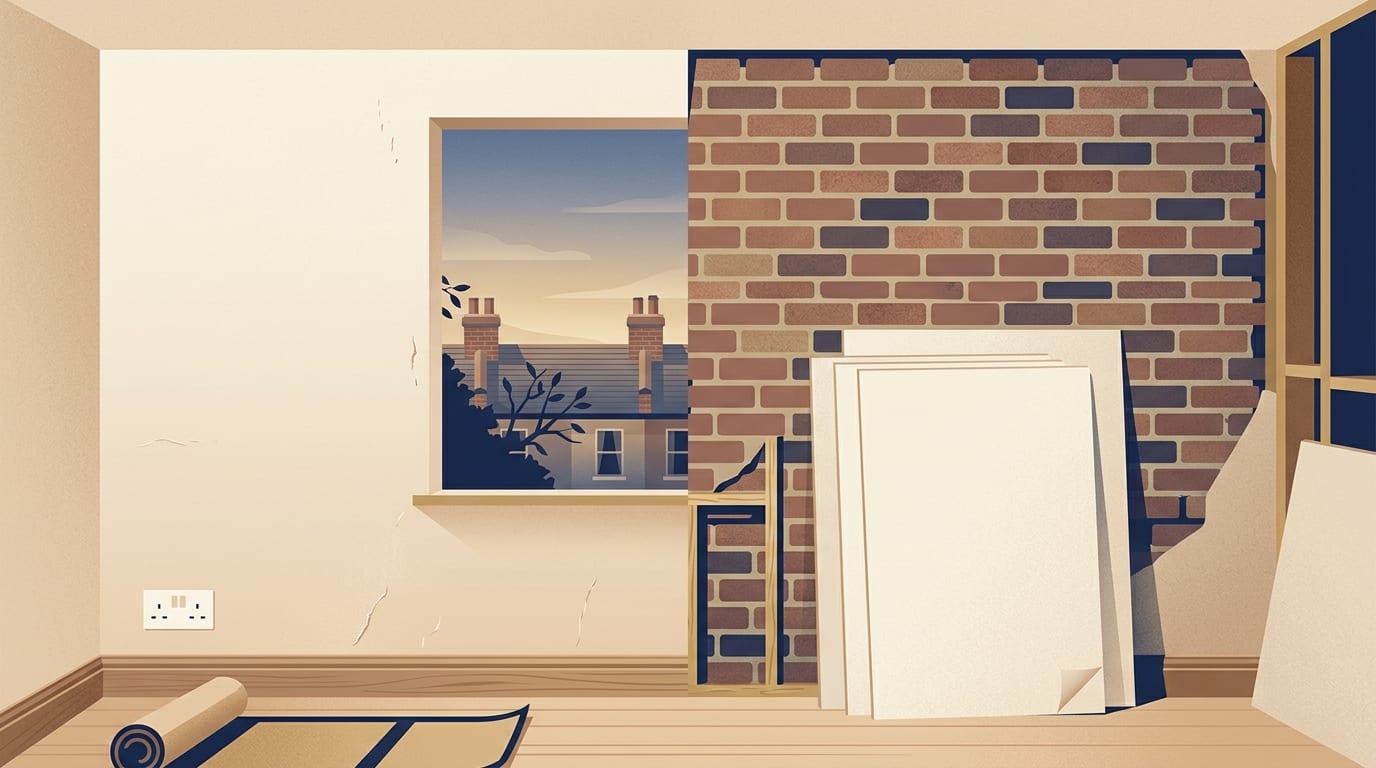
If your walls are sound and dry, a quick skim plastering job takes one to three days and costs between £375 and £750 a room. If the old plaster is crumbling, hollow or damp, it all has to come off for a full replaster, which costs between £25 and £45 per square metre in most of the UK and £30 to £58 in London and the South East. The right choice depends entirely on the condition of the wall underneath and what preparation it needs before the wet plaster goes on.
What skim plastering actually is
A skim is a thin finishing coat of plaster, usually just a few millimetres thick. It goes over a sound backing to create a perfectly smooth surface ready for paint or wallpaper. Plasterers apply it over existing solid plaster or over the paper face of new plasterboard. A professional skim usually involves two very thin layers applied one after the other. The plasterer applies the first coat, lets it firm up slightly, applies a second tighter coat to fill any hollows, and then polishes the surface flat with a wet trowel.
This thin finishing coat does not fix structural problems, hold a failing wall together or block damp. For a skim to work, the background must be completely dry, secure and well prepared. If the surface underneath is loose, the wet plaster will simply pull it away from the brickwork and crack. Skimming is highly skilled work that requires exact timing. You have a short window before the plaster sets hard, meaning an entire wall must be trowelled flat in one continuous process to avoid visible joins.
When a skim is enough
You only need a skim if the existing wall is structurally solid but looks tired, uneven or heavily scuffed. Small dents, hairline cracks and minor surface damage are easily covered by a fresh finishing coat. If a room has been recently stripped of wallpaper and the plaster underneath is intact but rough, a skim is the standard way to make it perfectly smooth again.
Plasterers check a wall by tapping it with their knuckles or the handle of a trowel. If it sounds dull and solid everywhere, the backing plaster is still holding fast to the brickwork or blockwork behind it. They will also look for any signs of moisture, flaking paint or powdery surfaces. If the wall passes the tapping test and is completely dry, a skim should give you a smooth finish without the mess of hacking off the old material.
Signs your walls need a full replaster
A replaster means hacking off the failed old plaster back to the bare brick or block, applying a thick backing coat to level the wall, and then adding the finishing skim. You will also need a replaster if you are stripping walls back to fix rising or penetrating damp.
Look for these signs that your walls need replacing entirely:
- Large cracks that keep coming back after being filled and sanded.
- Hollow-sounding patches when you tap the wall, known in the trade as blown plaster.
- Damp patches, brown staining or a powdery white salt crust on the surface.
- Crumbling plaster that falls away like sand when you touch it or strip wallpaper.
- Exposed brickwork or deep holes that go right back to the masonry.
If a wall is blown, the old plaster has lost its grip on the wall behind it. Skimming over blown plaster may look fine at first, but the new coat is only as secure as the loose plaster behind it and can crack or come away with it. Hacking off old plaster creates a huge amount of heavy rubble and very fine dust, so you will need floor protection and a plan for waste disposal.
Skimming over paint, wallpaper and old plaster
You cannot plaster over wallpaper. The water in the fresh plaster softens the wallpaper paste, causing the new skim and the paper to slide straight off the wall. All wallpaper must be completely stripped, and the wall washed down with sugar soap to remove every trace of old adhesive.
Plastering painted walls is possible, but only if the paint is in excellent condition and firmly bonded to the wall. Any flaking paint must be thoroughly scraped off. Gloss or silk paints provide absolutely no grip for wet plaster. To solve this, a plasterer will usually apply a grit primer over the painted wall. This liquid bonding agent contains fine sand, which dries to create a rough surface that the new skim coat can physically grip.
Old unpainted plaster walls present a different problem. They are highly porous and will suck the moisture out of the new skim too quickly, making the plaster crack and crumble before it sets. The plasterer will seal a porous wall with diluted PVA glue or an acrylic primer before skimming. This controls how fast the plaster dries and ensures a strong bond.
Artex and textured coatings
Plastering over textured ceilings is a common request, but it carries specific health risks. The Health and Safety Executive states that asbestos was banned in 1999 and may be found in any building built or refurbished before 2000. Textured coatings such as Artex can contain asbestos. If the coating is in good condition, it is often best left in place, and a plasterer trained to work safely with asbestos can skim over it or overboard it.
You must never try to repair or remove suspect materials yourself without training, and you should never dry sand, scrape or drill an Artex ceiling. If the coating has to come off, work on textured coatings is generally low risk and can be done by non-licensed workers, but they must be trained to recognise and work safely with asbestos. Energetic removal methods, or removing coatings that cover asbestos insulating board, require a licensed contractor. Always tell your tradespeople about textured coatings before work starts. If you choose to have it removed, Artex removal is quoted at between £17 and £125 per square metre.
Plasterboard options explained
Sometimes applying a thick, wet backing coat to bare brickwork introduces too much moisture into a house or takes too long to dry. Using plasterboard is a faster, drier alternative that leaves a perfectly flat surface ready for skimming.
- Dot and dab is the process of sticking plasterboard directly to bare masonry using thick dabs of adhesive.
- Board and skim involves fixing new plasterboard to timber stud walls or ceiling joists with screws, taping the joints to prevent cracking, and applying a thin skim finish over the top.
- Overboarding is a standard way to deal with a damaged or heavily textured ceiling without pulling it down.
With overboarding, the plasterer locates the timber joists above the existing ceiling and screws new plasterboard straight through the old plaster into the wood. This avoids the terrible dust and mess of taking down an old ceiling. A ceiling overboarding job normally adds between £400 and £1,000 to the cost of a room.
Cost and time compared
Plasterers price per job after seeing it, based on the area in square metres, ceiling height, access, and the state of the background. Ceilings are usually priced separately, and small jobs carry a minimum charge to cover a day rate and travel.
This table shows how the scope of the work changes the price per square metre.
|
Job type |
Rest of UK |
London and South East |
|---|---|---|
|
Skimming a sound wall |
£15 to £25 |
£18 to £32 |
|
Replaster or board and skim |
£25 to £45 |
£30 to £58 |
These figures are typical published prices for 2026, and local quotes will differ.
If you are paying by the room, skimming the walls usually takes one to three days and costs between £375 and £750. Adding the ceiling pushes the room price to between £500 and £1,100. If you only need repairs to damaged plaster, expect to pay between £100 and £300. London and the South East usually sit at the higher end of these ranges.
Building regulations and older homes
If you are stripping old plaster back to the brickwork on an external wall, you might trigger legal requirements to upgrade your insulation. Planning Portal guidance for England says that where 25 per cent or more of an external wall is re-plastered or re-lined internally, building regulations normally apply and the thermal insulation would normally have to be improved. This is about external walls, not internal dividing walls. The exact trigger depends on how much of the wall and of the whole building is being renovated, so ask your council's building control team before work starts.
Older period homes require a careful approach. Many older houses have lath and plaster, which is lime plaster applied over thin timber strips. The Society for the Protection of Ancient Buildings advises that old lime or clay plasterwork is worth conserving wherever possible. Lime plaster is breathable and moves naturally with the building. Modern gypsum plaster or cement is rigid, traps moisture, and can cause damp problems in solid masonry walls. You should retain as much original plaster as possible and replace it, where justified, with the same material. If you live in a listed building, you need listed building consent for any significant works inside or out.
Questions to ask before you accept a quote
Plastering is not a licensed trade, meaning there is no legal register like the one for gas engineers. A CSCS card is meant for construction sites and is not proof of quality on domestic work. FIS is the trade body for the finishes and interiors sector, and TrustMark is the government-endorsed quality scheme, but evidence of past local work matters most.
Under the Consumer Rights Act 2015, work must be done with reasonable care and skill. If not, you can ask for it to be put right or seek a partial or full refund. Citizens Advice suggests getting three written quotes, a written contract, paying deposits of no more than 25 per cent, and paying by card. You might also be able to cancel within 14 days of agreeing a contract. A quote is a fixed price, whereas an estimate is a rough guess.
Ask these questions to ensure your quote covers everything:
- Does the price include all materials, floor protection and waste removal?
- Are the ceilings included in the total or priced separately?
- Will you be scraping flaking paint or sealing the walls before skimming?
- Is VAT included in the final figure?
- Are you a registered waste carrier if you are taking old plaster away?
- Will you supply the scaffolding if it is needed for high stairwells?
Cash-only deals with nothing in writing leave you with no proof of what was agreed if the finish is wavy or the plaster cracks a week later.
Common questions
Can you patch plaster a small hole?
Patch plastering is perfectly fine for small areas of damage where an old socket has been removed or a piece of loose plaster has fallen away. The plasterer will cut back to clean edges, apply a backing coat if the hole is deep, and feather the new skim into the surrounding wall. Typical repairs to damaged plaster cost between £100 and £300 depending on the size.
How long does the new plaster take to dry?
A thin skim coat in a warm, well-ventilated room typically takes around a week to dry and turn pale pink. A full replaster with a thick wet backing coat can take several weeks. If you want to know exactly how long plaster takes to dry before decorating, wait for a uniform pale colour with no dark damp patches before you apply a watered-down mist coat of paint.
Do I need a full replaster if my walls are wavy?
Skimming follows the existing contours of the wall, so a thin coat of a few millimetres will not hide a severe lean or deep dips. If the wall is very uneven but structurally sound, a plasterer might suggest dot and dab plastering. This creates a perfectly flat new surface using plasterboard, without the mess of hacking off the old plaster.
Next steps
Before you invite a tradesperson to price the job, walk around the room and check the walls yourself. This helps you explain the job clearly and avoids unexpected costs halfway through the work.
- Tap the walls with your knuckles to listen for hollow sounds that mean the old plaster is blown.
- Look for damp patches that must be investigated and cured before any new plaster goes on.
- Note any textured coatings or Artex ceilings that might need sealing or special handling.
- Decide if you want the ceilings skimmed at the same time to save money on a return visit.
- Check whether you are replastering 25 per cent or more of an external wall, which can trigger insulation requirements.
- Get three written quotes that break down the preparation, materials, ceilings and waste removal.
Understanding exactly what your walls need is the best way to get an accurate price and ensure the finished room looks flawless under a coat of paint. When you are ready to compare local professionals, check their previous work and read their customer reviews, you can find a plasterer near you to arrange a site visit and a formal quote.
Related Guides
Internal Wall Insulation and Insulated Plasterboard Explained
How internal wall insulation and insulated plasterboard work on solid walls, what they typically cost in 2026, what you could save and the damp risks to avoid.
How to Soundproof a Wall and What It Costs
What really cuts noise through a wall, from acoustic plasterboard to an independent wall, what each option typically costs in 2026, and where acoustic plaster fits in.
When Do You Need Fire Rated Plasterboard?
Where building regulations call for fire rated plasterboard, from attached garages to loft conversions and stairways, what the ratings mean and what the boards add to a quote.