
Types of Plastering and Which Finish Suits Your Walls
TopRatedPlasterers.co.uk · 6 October 2026
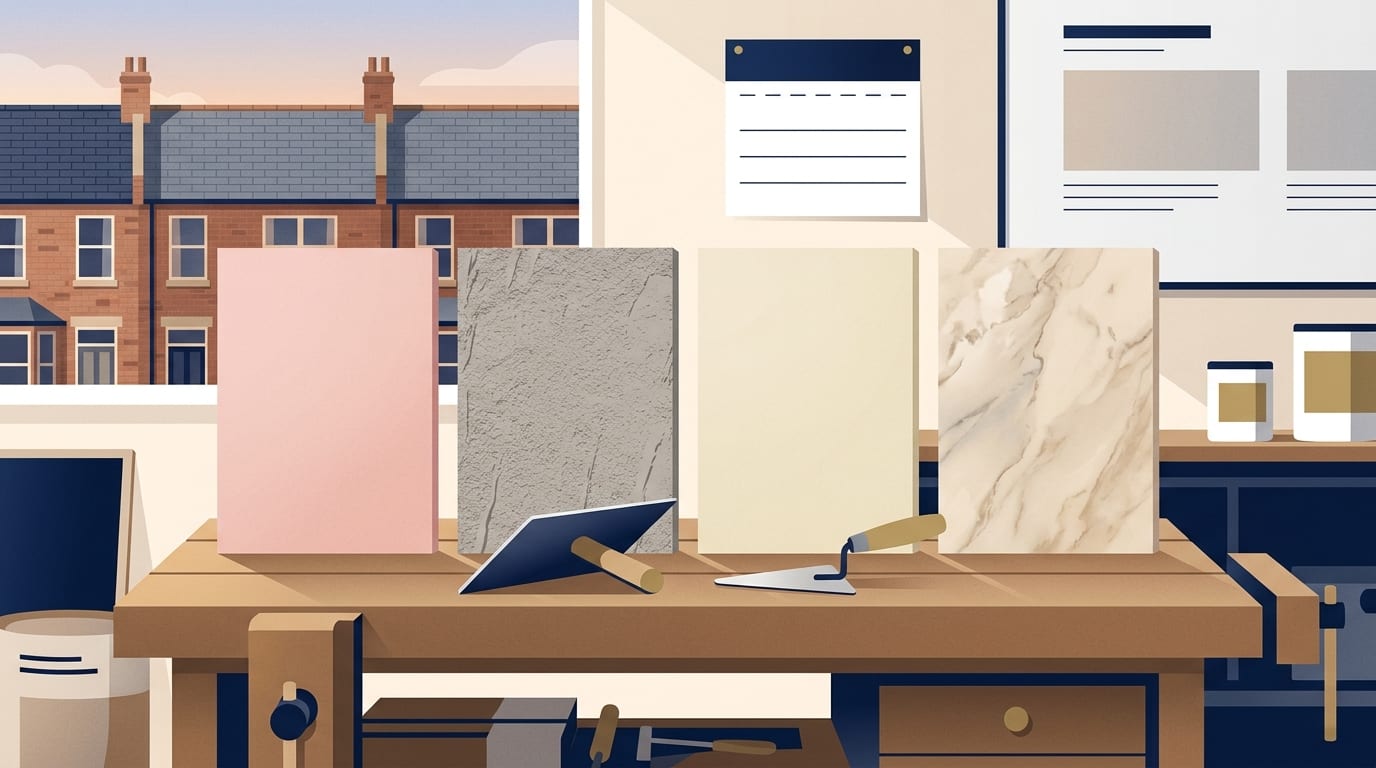
Most modern interior plastering is gypsum based, usually applied as a thin finishing skim over plasterboard or built up in two coats on bare masonry. Gypsum plastering on masonry walls typically costs £25 to £40 per square metre. The system your walls need depends on the surface beneath and whether you are repairing a small crack or completely renovating a room. Understanding the types of plastering helps you compare quotes and ensures your home gets a finish that lasts.
What plastering does
Plastering provides a smooth, flat surface on internal walls and ceilings so they are ready to decorate. It seals bare brickwork and blockwork to stop draughts and dust entering your rooms. A solid layer of plaster also adds mass to a wall, which improves sound insulation and provides a degree of fire resistance.
There are three broad approaches to plastering a wall. You can apply wet plaster directly to masonry in two layers, consisting of a thick backing coat and a thin finishing skim. You can stick or screw dry plasterboard to the wall and finish it with a wet skim coat. Finally, for older houses, you can use traditional lime or clay plasters that allow the walls to breathe naturally.
The finishing skim most walls get
A skim is a thin finishing coat applied over plasterboard or a solid backing coat. It is usually a few millimetres thick and goes on wet to create a smooth surface. When tradespeople talk about skimming a room, they mean this final top layer.
Multi-finish is the most common product used for this top layer. It started as a manufacturer's product name but is now used loosely across the trade for a thin finishing coat, about 2mm thick, laid over plasterboard or an undercoat. A standard 25kg bag of finish plaster costs £10 to £15, covers about 10 square metres and gives a smooth surface when trowelled out correctly.
Skimming is the standard way to refresh tired walls or finish new plasterboard. It requires the wall underneath to be sound and firmly attached. If the old plaster is loose or blowing, a new skim coat will simply fall off with it, meaning you need to look at whether you need skim plastering or a full replaster. Once the plasterer finishes, you must wait before decorating, and you can check how long plaster takes to dry to ensure you do not paint too early.
Backing coats and when they are needed
When you take old plaster back to bare brick or blockwork, the wall surface is too uneven to take a thin skim coat straight away. A plasterer must first apply a thick backing layer, known as an undercoat, to level the wall. This is a two coat system, where the backing coat does the heavy lifting before the finishing skim provides the smooth surface.
Hardwall is a common type of backing coat used on bare brick or block walls. It is applied thickly, usually around 11 millimetres, and offers high impact resistance. Like multi-finish, hardwall is a product name that plasterers now use as a general term for this type of backing layer. Undercoat products such as hardwall cost £15 to £20 per 25kg bag.
Bonding is another traditional base coat applied before a skim. It is suited to smoother backgrounds that do not absorb much water, such as concrete, or for irregular surfaces that need levelling. A bonding coat is usually applied between 11 millimetres and 25 millimetres thick. Planning Portal guidance for England says that if you are re-plastering or internally re-lining 25 per cent or more of an external wall, building regulations normally apply and the wall's insulation would normally have to be improved.
One coat plaster and when it makes sense
One coat plaster combines an undercoat and a finishing plaster in a single product. It is designed to be applied in one go directly onto blockwork, brick, plasterboard or concrete. You can use it to fill depths of up to 13 millimetres in a single application.
This type of plaster is used for small repairs, filling holes, patching cracks and covering minor imperfections. It is ideal for patching work where speed matters more than achieving a flawless finish.
One coat plaster is usually not the first choice for a full room replaster. When skimming a whole room or finishing large areas of bare masonry, a traditional two coat system or a dedicated finishing skim is better suited and gives a superior surface.
Plasterboard and dot and dab
Dry lining is the process of covering internal walls with plasterboard instead of applying wet backing coats. It is much faster than traditional wet plastering and introduces far less moisture into the house. Once the plasterboard is fixed in place, the plasterer applies a thin multi-finish skim over the top to create a seamless wall.
Dot and dab is the most common way to fix plasterboard to solid masonry walls. The installer applies thick dabs of specialist adhesive to the wall and presses the plasterboard firmly into them. The dabs hold the board flat and plumb, leaving a small cavity behind the board.
On timber stud walls or ceiling joists, the plasterboard is screwed directly to the timber. Overboarding is a similar technique where new plasterboard is fixed directly under an old ceiling. You can specify upgraded plasterboard where needed, as moisture resistant or fire rated boards add £3 to £6 per square metre to the material cost.
Lime and clay plasters for older walls
Houses built before the First World War were generally constructed with solid masonry walls that need to breathe. They were originally finished with lime or clay plasters. The Society for the Protection of Ancient Buildings advises that old lime or clay plaster can have a more pleasing character and offer better internal comfort and sound insulation than modern substitutes.
These traditional materials are highly breathable, allowing moisture to evaporate freely from the walls. They are often indiscriminately replaced with modern gypsum products, which can trap moisture in older solid walls. You can read more about using lime or gypsum plaster to understand what suits your property.
Lath and plaster is a traditional ceiling and wall finish found in older houses, where lime plaster is pressed into narrow timber laths. If you are repairing this type of flexible background, hair reinforcement within the lime plaster is crucial. Underlying structural or damp problems must be dealt with first, and once the lime plaster is dry, you must decorate it with a vapour permeable paint compatible with existing finishes, such as limewash, soft distemper or some clay based paints.
Decorative and textured finishes
Venetian plaster is a decorative finish made from slaked lime putty and marble dust mixed with mineral pigments. It is applied in multiple thin layers and polished to create a smooth surface that reflects light. It requires specialist skills to apply and costs significantly more than standard gypsum plastering.
Microcement is another decorative option, applied as a seamless layered coat used in wet rooms and modern interiors. Because these are specialist applications, you should always use an installer who can show a portfolio of the specific finish you want.
Textured coatings were used for decorative finishes on ceilings and walls, often known by trade names such as Artex. These finishes are rarely applied today, and the Health and Safety Executive warns that textured coatings may contain asbestos in any building built or refurbished before 2000. Homeowners should not sand, scrape or drill suspect coatings and should tell tradespeople about them before work starts. Work on them does not normally need a licensed contractor but must be done by people trained to work safely with asbestos, though energetic methods such as wet abrasive blasting do require a licensed contractor.
Typical costs by type
Plasterers price per job after seeing it, basing their quote on the area in square metres, ceiling height, access and the preparation required. Larger projects can reduce the cost per square metre, while small rooms such as box rooms or bathrooms can cost more per square metre. London and the South East cost more than the rest of the UK, with plasterers typically charging £250 to £350 a day compared to £200 to £300 elsewhere.
The table below compares the typical costs for different plastering and decorative finishes.
|
Type of finish |
Typical cost per square metre |
|---|---|
|
Skimming plasterboard |
£13 to £30 |
|
Gypsum plastering on masonry walls |
£25 to £40 |
|
One coat plaster |
£25 to £40 |
|
Traditional lime plaster |
£50 to £90 |
|
Microcement |
£90 to £160 |
|
Venetian plaster |
£90 to £250 |
These figures represent typical published prices for 2026 and your local quotes will differ. A medium room measuring three metres by three metres typically costs £425 to £600 to skim over plasterboard over one to two days, or £700 to £1,000 for a two coat system directly on masonry walls over two to three days.
How to read the plaster types on a quote
A written quote is a fixed price, whereas an estimate is just a rough guess. When you receive a quote from a plasterer, it should clearly state which system is being used on which walls. The cheapest quote is not always the right choice if it skips necessary preparation or uses the wrong materials for your property.
A thorough quote should list exactly what is included.
- Whether the walls require a full replaster with a backing coat or just a finishing skim.
- If plasterboard is being used, whether it is fixed with dot and dab adhesive or screwed to timber studs.
- Whether the price includes the ceilings, which are usually priced separately.
- The preparation work involved, such as stripping wallpaper, removing loose plaster or sealing painted surfaces.
- Whether materials, waste removal, floor protection and VAT are included in the final figure.
Under the Consumer Rights Act 2015, work must be done with reasonable care and skill. If a plasterer skims over loose, damp or unsealed painted surfaces, the new coat will likely crack or peel. Check that your quote includes the right base coats and preparation to prevent this, and if the work is not up to standard, you can ask for it to be put right or seek a partial or full refund.
Common questions
What is multi finish plastering?
Multi finish is a thin finishing layer of gypsum plaster, usually a few millimetres thick. It is applied over plasterboard or an undercoat to provide a smooth surface ready for decoration. The name started as a specific brand but is now used generally across the trade for this standard finishing coat.
What is hardwall plastering?
Hardwall is a type of thick backing coat used on bare brick or blockwork. It levels uneven masonry walls before the final thin skim coat goes on. It is applied thickly, usually around 11 millimetres, and offers high impact resistance.
What is smooth plastering?
Smooth plastering refers to the standard flat finish achieved by applying a skim coat of finishing plaster. A skilled plasterer trowels the wet plaster flat as it cures, removing any ripples or trowel marks. This leaves a surface that requires minimal preparation before painting.
What is one coat plastering?
One coat plaster combines a backing undercoat and a finishing skim into a single product. It is used for small repairs, filling holes and patching minor imperfections because it can fill depths of up to 13 millimetres in one go. It is normally not the first choice for a full room replaster.
What is the best plaster for older houses?
Older period properties constructed with solid walls usually require traditional lime or clay plaster. These breathable materials allow moisture to escape, whereas modern gypsum can trap moisture in old solid walls. Conservation bodies advise repairing original lime plaster where possible and replacing it like for like.
Your next steps
Before you agree to a contract or pay a deposit, you should make sure the tradesperson is suited to the specific type of plastering your walls need.
- Ask the plasterer to inspect the walls in person to see if they need a backing coat or just a skim.
- Check whether your property is listed, as listed buildings need consent for any significant work inside or out.
- Follow Citizens Advice guidance by getting three written quotes and a written contract.
- Ensure deposits are no more than 25 per cent and pay by card for extra protection.
- Check that any trader who carries waste away from your home is a registered waste carrier on the public register.
Plastering is not a licensed trade and there is no legal register like the one for gas engineers. A CSCS card is for construction sites and is not proof of quality on domestic work. You can look for members of the FIS, which is the trade body for the finishes and interiors sector, or tradespeople registered with TrustMark, the government-endorsed quality scheme. You can find a plasterer near you by checking their customer reviews and ensuring they have a track record of the specific finish you require.
Related Guides
Internal Wall Insulation and Insulated Plasterboard Explained
How internal wall insulation and insulated plasterboard work on solid walls, what they typically cost in 2026, what you could save and the damp risks to avoid.
How to Soundproof a Wall and What It Costs
What really cuts noise through a wall, from acoustic plasterboard to an independent wall, what each option typically costs in 2026, and where acoustic plaster fits in.
When Do You Need Fire Rated Plasterboard?
Where building regulations call for fire rated plasterboard, from attached garages to loft conversions and stairways, what the ratings mean and what the boards add to a quote.