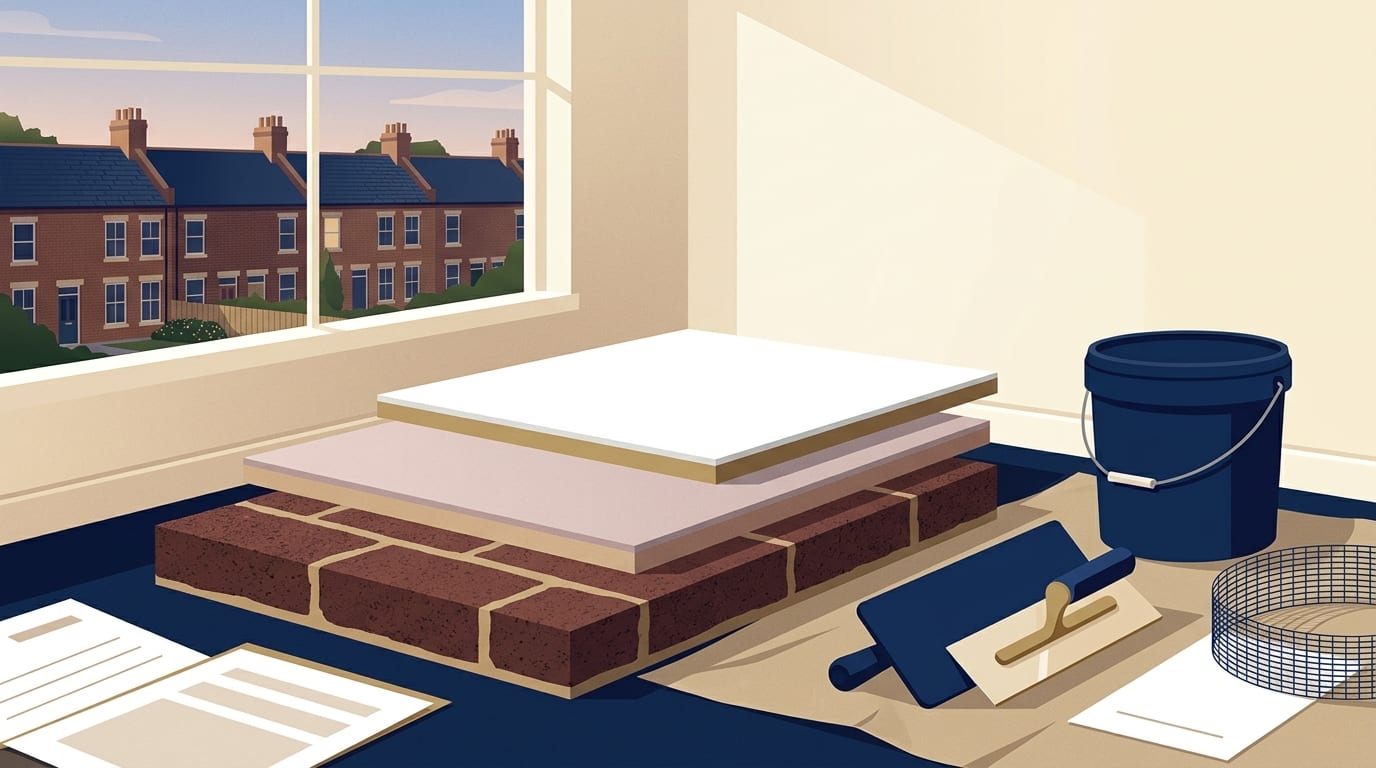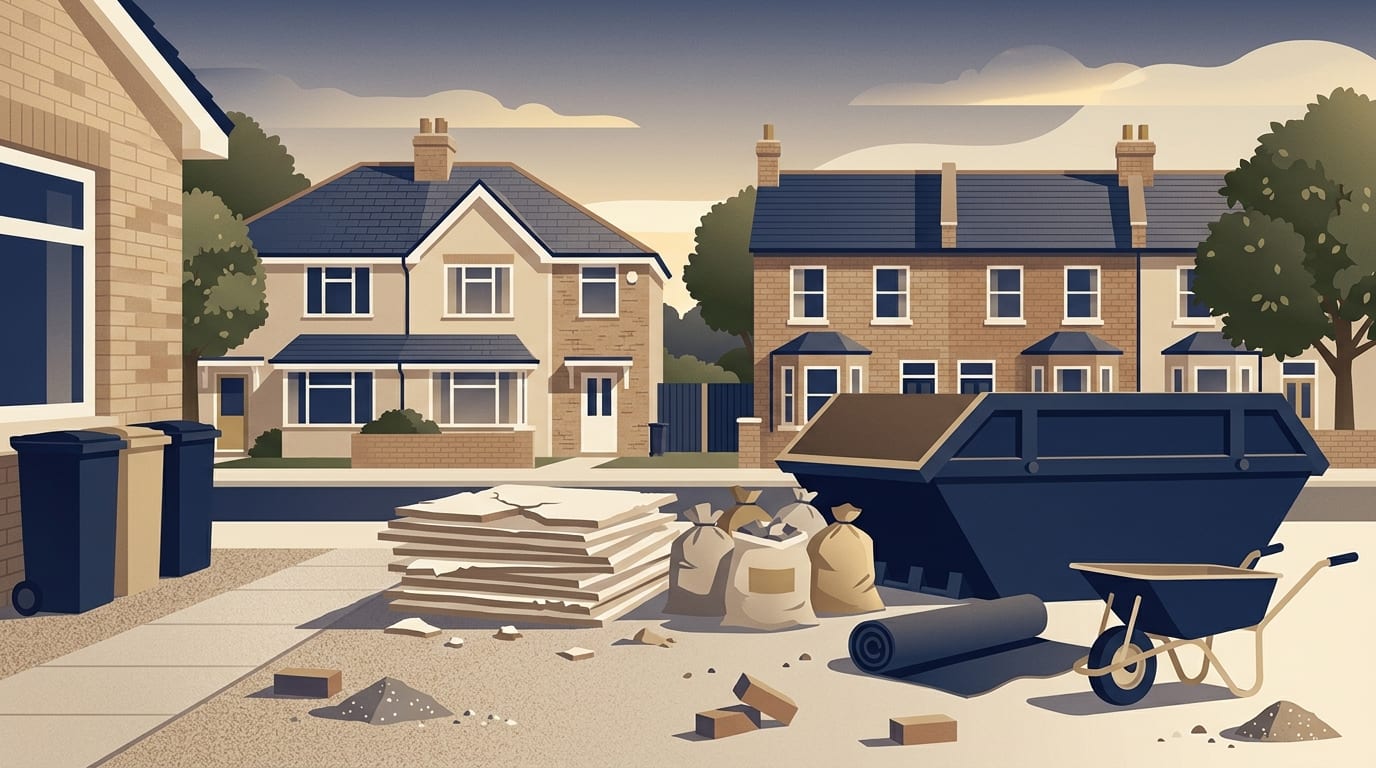
Plasterboard and old plaster are classed as gypsum waste and must be kept separate from other rubbish. You cannot simply throw them into a mixed skip or a standard household bin. Because of their chemical makeup, plaster products require dedicated disposal methods at a recycling centre, a separate skip or removal by a registered waste carrier.
Gypsum waste has high sulphate levels, and NetRegs, the government-backed environmental guidance, says you must separate plaster, plasterboard and other gypsum products from your general wastes. This applies whether you have a few offcuts from patching a wall or a whole room of stripped plasterboard.
Non-hazardous gypsum waste must go to a separate cell for high sulphate waste. Alternatively, it can go to a non-hazardous landfill where no biodegradable waste is accepted. Any gypsum-based material that is classed as hazardous must go to a hazardous waste landfill.
Clean, uncontaminated plasterboard can be recycled rather than buried. A number of organisations can recycle waste plasterboard. Speak to your supplier for more information if you are buying new boards and want to know how the waste is handled.
How renovation work creates gypsum waste
Before you plan your waste disposal, it helps to understand how different plastering jobs create rubbish. A skim is a thin finishing coat, a few millimetres thick, applied over sound plaster or plasterboard. A skim goes over sound plaster or plasterboard, so little has to be taken off the wall first.
A full replaster is a much larger job. A replaster means hacking off failed plaster and applying a backing coat plus a finish coat, or fixing new plasterboard and skimming it, which is known as board and skim. Hacking off old walls creates heavy bags of broken plaster that must be disposed of correctly.
Modern homes often use dot and dab, which is plasterboard stuck directly to brick or block walls on dabs of adhesive. When these boards suffer water damage or need replacing, removing them creates bulky plasterboard waste. Older houses often feature lath and plaster, which is lime plaster spread over timber laths. Taking down a failing lath and plaster ceiling creates a huge amount of dusty waste, though conservation bodies advise repairing original lime plaster where possible and replacing like for like.
Overboarding is new plasterboard fixed directly under an old ceiling, leaving the original material in place. It is not suitable for every ceiling, so ask the plasterer whether it suits yours.
Who is responsible if a tradesperson removes it
When you hire someone to replaster a room, the waste they produce is their responsibility. The Waste Duty of Care Code of Practice states that if a tradesperson carries out work on your property, they are responsible for the waste they produce including its transport and disposal. You should not be left to deal with a pile of old plaster on your driveway.
The cost of its disposal should be included in what they charge for the work. Check that the quote covers the waste removal. You can choose to dispose of the old boards yourself to keep the job cost down, but you must agree on this before the work starts.
If the tradesperson hires a skip for the job and you add your own waste to their skip, the duty of care applies to that waste. You become responsible for ensuring what you put in is legal and safe. You must not sneak old paint cans or household rubbish into a plasterboard skip, as this contaminates the load and breaks the separation rules.
Checking a waste carrier
If you engage a private business such as a skip hire firm or a house clearance company to take away your plasterboard, you must check they are operating legally. The law requires them to be an authorised carrier with up to date and valid upper tier registration.
Each carrier should have a registration number starting CBDU, followed by a set of numbers. Ask to see this number before you let them load your waste into their van. A registration number is a starting point rather than a guarantee, so check it on the public register.
In England, you can check this number on the Environment Agency public register or call them on 03708 506 506. In Wales, you check with Natural Resources Wales or call 0300 065 3000. Do not hand over your waste if the carrier cannot prove their registration.
Taking it to a recycling centre
If you tackle a small job yourself, you will likely take the old plasterboard to the local tip. In England, households no longer have to pay to get rid of small-scale DIY waste at council recycling centres following a government rule change. This change took effect on 31 December 2023 to help householders improve their homes without facing high disposal fees.
This free disposal applies when the waste meets certain limits. The main limit is that the waste must not exceed two 50L rubble bags. Before this change, fees had reached £10 per item, for example a single piece of plasterboard.
Councils still differ on exactly how they handle plasterboard, so you must check your local authority website before travelling. As an example, Cornwall Council states they can only take plasterboard if it is separate from other materials. They offer a free allowance up to eight small sand or aggregate bags, or four sheets. Anything over this free allowance costs £6.00 per sheet or bag, based on charges from 1 January 2024. Furthermore, five named sites in the county do not take DIY waste or plasterboard at all.
The government change to DIY waste charges is for England only. If you live in Wales, Scotland or Northern Ireland, you must check your own council rules as charges and allowances will differ.
Skips and clearance firms
When a renovation generates too much waste for the car, you will need a skip or a clearance firm. Because gypsum must be kept separate from general waste, ask the skip company how it handles plasterboard before you book.
Always tell the skip firm exactly what you are throwing away so they supply the right container. Plasterers price per job after seeing it, and their quote will reflect the cost of these dedicated skips.
The table below shows what you might expect a builder or plasterer to charge to handle the removal and disposal of old plasterboard.
|
Service |
Typical cost |
|---|---|
|
Waste disposal |
£120 to £350 |
|
Old board or plaster removal |
£8 to £20 per square metre |
This table shows typical 2026 prices. Local quotes will differ based on the amount of waste, your location and the access to your property.
Old plaster and textured coatings that may contain asbestos
Taking down an old ceiling or stripping walls is not just about heavy lifting. The Health and Safety Executive states that textured coatings such as Artex may contain asbestos in any building built or refurbished before 2000. These asbestos-containing materials need to be legally disposed of as hazardous waste.
They should not be mixed with normal household waste or put in a standard skip. Asbestos waste should only be handled by a licensed disposal site. Householders can contact their local authority for information on where and how to safely dispose of it.
Work on these coatings does not normally need a licensed contractor, but it must be done by people trained to work safely with asbestos. You should not sand, scrape or drill suspect coatings, as this releases harmful fibres into the air. Tell tradespeople about any suspect ceilings before work starts, and read about whether your Artex contains asbestos. A professional asbestos survey is the way to find out, so do not take samples yourself.
What a quote should say about waste
A written quote from a plasterer should be clear about what happens to the rubble. A quote is a fixed price, while an estimate is a rough guess. You want a fixed price that includes the cleanup and the legal disposal of all gypsum waste.
Plasterers price per job after seeing it, based on area in square metres, the state of the background, ceiling height and access, and preparation. A detailed quote should list the preparation work required, which often generates the waste. This preparation includes:
- Stripping old wallpaper before skimming.
- Removing loose or blown plaster from the walls.
- Sealing painted surfaces so the new coat does not crack or peel.
- Dealing safely with old Artex ceilings.
Quotes that omit preparation, ceilings, scaffolding or waste are a common reason jobs go wrong and costs spiral. Under the Consumer Rights Act 2015, work must be done with reasonable care and skill. This includes leaving the property tidy and dealing with the waste safely. If the tradesperson fails to do this, the customer can ask for it to be put right or seek a partial or full refund.
Citizens Advice suggests getting three written quotes, a written contract, paying deposits of no more than 25 per cent, and paying by card. If you are stripping the walls yourself to save money, the quote should clearly state that you are responsible for the disposal. Read more on how to compare plastering quotes and spot what is missing before you agree to a price.
Questions to ask before work starts
Before you agree to a contract, make sure you and the plasterer understand exactly how the rubbish will be managed.
- Will you take all the old plaster and plasterboard away at the end of the job?
- Is the cost of waste disposal fully included in this written quote?
- Do you have an upper tier waste carrier registration number starting with CBDU?
- Will you need a dedicated skip for the gypsum waste?
- Do you need me to arrange any parking permits for a skip?
- Have you factored the removal of the old loose plaster into the price?
- Are there any extra charges if we find more damaged plaster behind the walls?
Getting these answers in writing helps you check what the price covers.
Common questions
How to dispose of plaster?
Old plaster is classed as gypsum waste, just like plasterboard. It must be kept separate from general rubbish and taken to a recycling centre that accepts it, or removed by a registered waste carrier. Clean, uncontaminated plasterboard can be recycled, but gypsum waste must be kept separate from general waste because of its high sulphate levels.
Can I put plasterboard in a normal skip?
You cannot put plasterboard into a mixed skip with general building rubble or household waste. Because of the sulphates in gypsum, it must be kept separate from general waste. Ask the hire firm how it handles plasterboard, as you may need a separate container.
Does the plasterer have to take my waste?
If a tradesperson creates the waste while working on your property, the duty of care rules mean they are responsible for its transport and disposal. They will charge you for this service as part of their quote. You can choose to dispose of it yourself to keep the job cost down, but you must agree on this before work begins.
Does old Artex have to be disposed of differently?
Yes, if it contains asbestos. A textured coating from before 2000 may contain asbestos, and asbestos-containing materials need to be legally disposed of as hazardous waste. They should not be mixed with normal household waste or put in a skip, and asbestos waste should only be handled by a licensed disposal site. Ask your local council for information, and do not break up suspect material yourself.
Next steps
Dealing with old plaster and plasterboard is simple as long as you plan ahead and follow the rules.
- Check your local council website for their specific rules and charges for plasterboard at the recycling centre.
- Ask your plasterer to include waste removal in their written quote.
- Check the tradesperson or clearance firm has a valid CBDU waste carrier registration.
- Have any pre-2000 textured coating checked by a professional asbestos survey before it is disturbed.
When you are ready to start your renovation and want to ensure the rubbish is handled legally and safely, you can find a plasterer near you to get written quotes for the whole job.
Find a top rated plasterer near you
1,036 plasterers across the UK, each ranked on their Google rating and the number of reviews behind it. Start with your county: