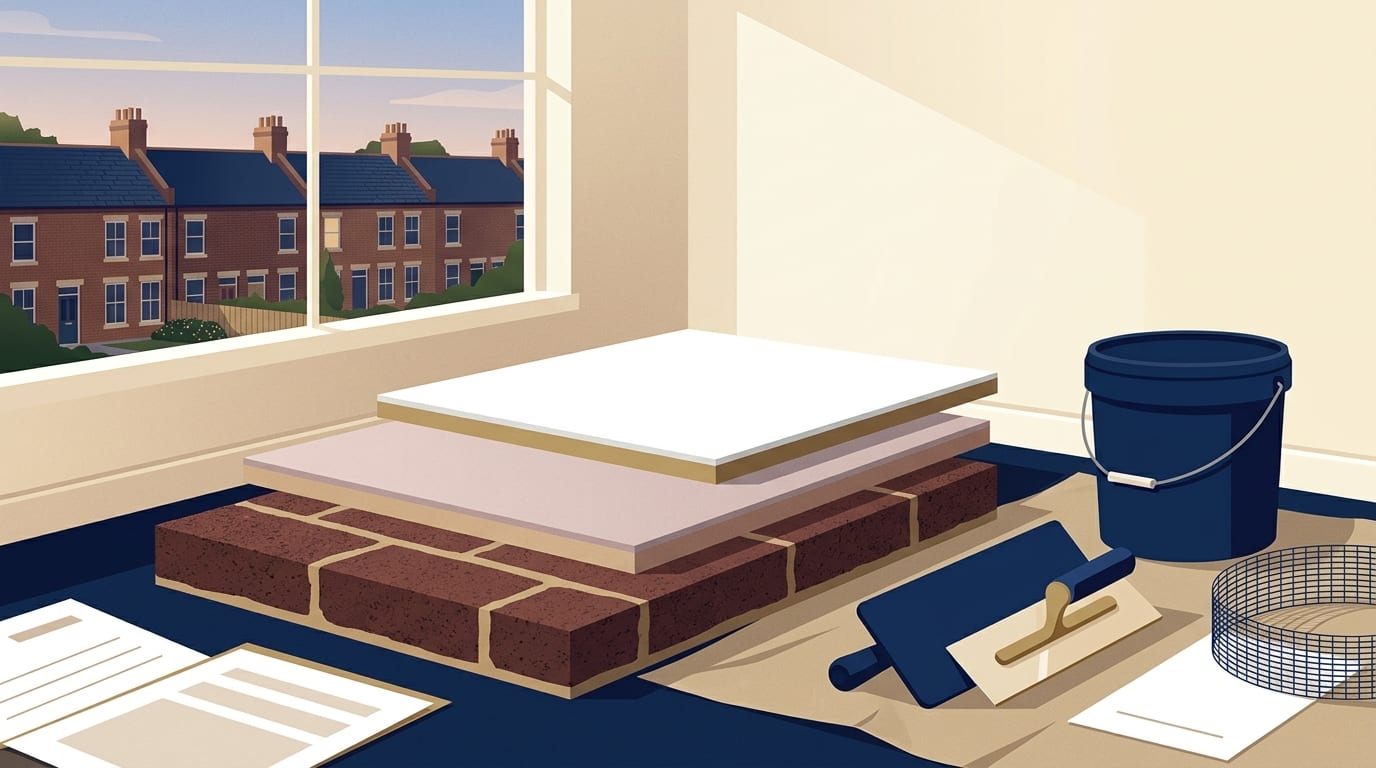
If a new wall or ceiling shows ridges or a rough patch, it is tempting to reach for sandpaper. Yes, hardened plaster can be sanded, but on a fresh skim coat it is a light touch job, not a routine step, and the dust is the real cost. A skim is a thin finishing coat, a few millimetres thick, applied over sound plaster or plasterboard. A skilled plasterer leaves this surface smooth enough to paint without heavy sanding. You apply a mist coat, which is watered-down paint, to seal the new plaster before your main colour goes on.
Why new skim is usually not sanded
A wavy finish is something you will see every day once it is painted. A professional finish should not have these waves. A standard room can usually be skimmed in one to two days. Plasterers work the wet plaster with a trowel as it hardens to create a polished surface. Sanding this fresh surface ruins the smooth finish, creates unnecessary work, and causes massive dust and disruption in your home.
You must let the wall dry completely before you touch it. A skimmed room is typically ready for a mist coat in three to seven days and fully dry in up to two weeks. Paint makers advise waiting a week or two for finishing plaster to dry fully, and some specialist plasters take longer. Lime plaster can take up to a month to dry. Drying time depends on ventilation and the weather.
Another rule of thumb is that plaster takes up to four weeks to dry completely. You will know the wall is ready when it has turned from mid-brown to a uniform pale salmon colour.
Sometimes a wall needs more than a skim. A replaster means hacking off failed plaster and applying a backing coat plus a finish coat. Alternatively, a plasterer might fix new plasterboard and skim it, which is known as board and skim. They might use dot and dab, which is plasterboard stuck on dabs of adhesive. Overboarding is new plasterboard fixed under an old ceiling.
When a little sanding is fine
Even a good plasterer might leave a tiny ridge or a rough patch. Paint manufacturer guidance says you can remove uneven areas on newly plastered walls. You should do this gently with a scraper. This is particularly useful in the corners where the trowel cannot easily reach.
After scraping, you sand the wall with 180-grit sandpaper. Sanding should key the surface so paint adheres more easily, giving you a much stronger bond for your top coats. You only do this on the small rough patches, not the entire wall.
If you spot any flaws in the wall, you can sand or fill them before adding your colour. Make repairs before the top coat and let the mist coat dry.
Keeping the dust under control
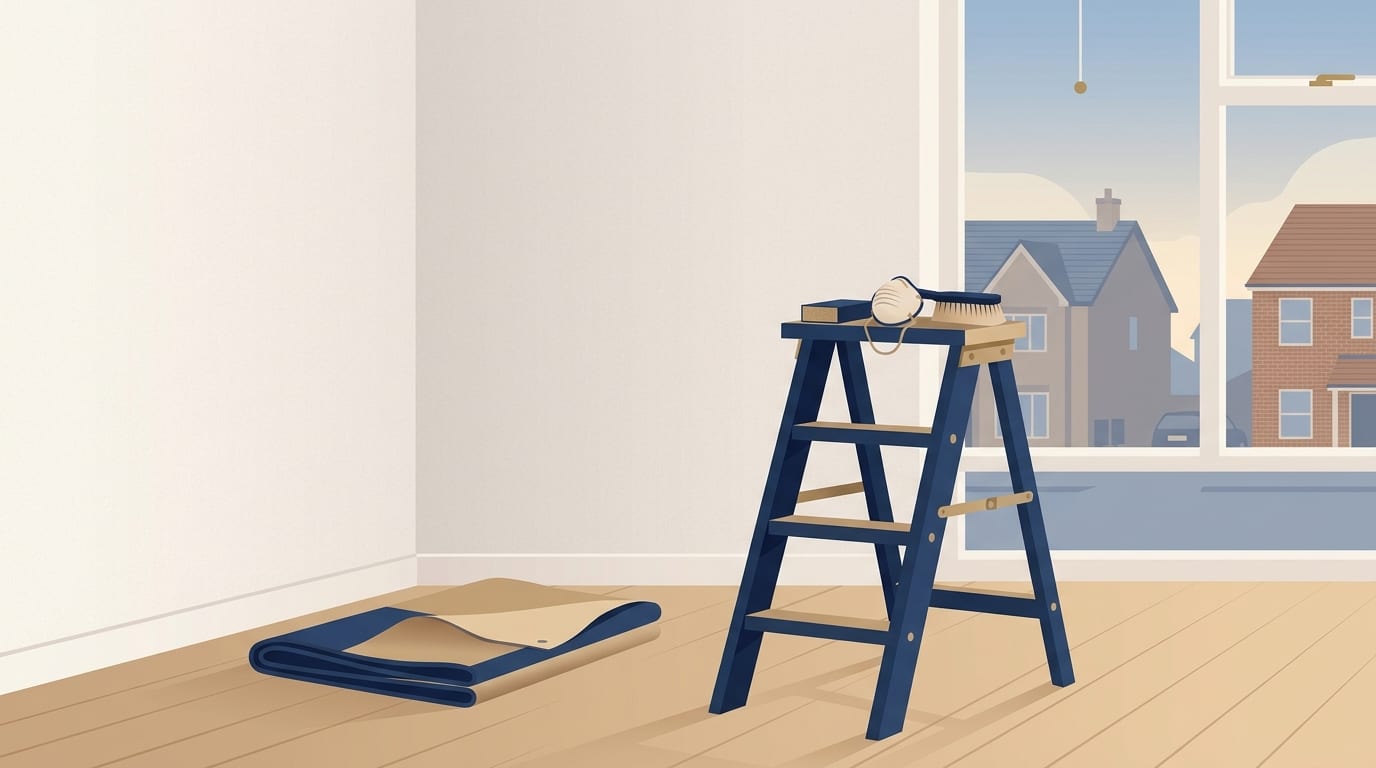
Plaster dust gets everywhere, and you do not want it spoiling the finish when it comes to painting. You must prepare the room properly before any sanding or scraping begins.
Cover floors and furniture with dust sheets before starting. Vacuum carefully afterwards to remove the fine powder.
The Health and Safety Executive says construction dust is not just a nuisance. It is a real risk to your lungs. Employers must protect against hazardous construction dusts under COSHH. It is sensible to take dust seriously at home too. You can read the full guidance on the HSE construction dust page.
You can limit the dust in your home by following a few basic steps.
- Wait until the plaster is fully dry before you touch it.
- Sand lightly and only on the spots that need it.
- Wear a mask to protect your lungs.
- Open the windows to ventilate the room.
- Wipe down the walls with a damp cloth before applying the mist coat.
Old plaster and textured coatings you must not sand
Older houses often have lath and plaster. This is lime plaster on timber laths. Conservation bodies advise repairing original lime plaster where possible and replacing like for like.
If you are renovating, you might find textured decorative coatings on your ceilings and walls. Trade names for these coatings include Artex. The HSE says asbestos may be part of any commercial or domestic building built or refurbished before the year 2000. This includes textured decorative coatings. You should always tell tradespeople about them before work starts so they can take the correct precautions.
Do not try to repair or remove any asbestos materials yourself. Tell builders or maintenance workers about asbestos in the home before they start. You can check the rules on the HSE asbestos FAQ.
The HSE says work on these coatings can be carried out by non-licensed workers, but they must be trained. Removal by energetic methods such as wet abrasive blasting is higher-risk and needs a licensed contractor. If you think a ceiling or wall has Artex or a similar coating, leave it alone and ask a trained professional before any work. The official advice is on the HSE asbestos materials page.
Do not sand, scrape or drill suspect coatings. Sanding or scraping Artex creates dust and can be dangerous if the coating contains asbestos.
Mist coat, filling and checking the finish
A mist coat is a watered-down layer of paint that seals the fresh plaster. It stops the new plaster from sucking all the moisture out of your top coat.
Wipe down the wall to remove any fine dust before you apply the mist coat. Once the mist coat is on, the wall will look different. The paint highlights any small ridges or rough patches that you could not see on the bare plaster.
Things go wrong when people skim over loose, damp or unsealed painted surfaces. The new coat cracks or peels because it has nothing solid to grip. Putting gypsum or cement on old lime walls is another common cause of failure. A skilled plasterer will check the background and prepare it properly before they start. You can learn more about how to get the mist coat right before you start painting.
How plastering and rendering jobs are priced
Plasterers price per job after seeing it. They base their quotes on the area in square metres, the state of the background, ceiling height and access. If the wall hides something worse, like crumbling brickwork or severe damp, the plasterer will have to fix the underlying issue before they can apply the new coat.
Preparation work takes time and pushes the price up. This includes stripping wallpaper, removing loose plaster, sealing painted surfaces and dealing with Artex. Ceilings are usually priced separately. Small jobs carry a minimum charge. London and the South East cost more than the rest of the UK.
Always check whether the following items are included in your written quote.
- VAT on labour and materials
- All required building materials
- Waste removal and skip hire
- Floor protection and dust sheets
- Scaffolding for external work
A trader who carries waste must be a registered waste carrier, and the register is public.
Plasterers also work on the outside of your home. External render comes as sand and cement, lime, pebbledash, monocouche and thin-coat acrylic or silicone systems. K Rend is a manufacturer's brand name often used loosely for silicone render. Render is priced per square metre with scaffolding often a separate line on the quote.
Building regulations and planning rules
You must follow the rules when you change the plaster or render on exterior walls. Where 25 per cent or more of an external wall is re-rendered, re-plastered or re-lined internally, the building regulations normally apply. The wall's insulation would normally have to be improved at the same time.
Rendering needs no planning permission in England if materials are of similar appearance to the existing house. However, it does need permission in conservation areas, National Parks, Areas of Outstanding Natural Beauty and the Broads.
Listed buildings need consent for any significant work, inside or out. If you live elsewhere in the UK, or if you are unsure, you should check with your local council before any work begins.
How to tell a skilled plasterer from a bad one
Plastering is not a licensed trade. There is no legal register like the one for gas engineers, so evidence of past work matters. A CSCS card is for construction sites, not proof of quality on domestic work.
FIS is the trade body for the finishes and interiors sector. TrustMark is the government-endorsed quality scheme. You should look for tradespeople who are members of recognised bodies.
Under the Consumer Rights Act 2015 work must be done with reasonable care and skill. If it is not, the customer can ask for it to be put right or seek a partial or full refund.
A quote is a fixed price, while an estimate is a rough guess. Citizens Advice suggests getting three written quotes and a written contract. They advise paying deposits of no more than 25 per cent and paying by card. They also say you might be able to cancel within 14 days of agreeing a contract.
Things often go wrong with cash-only deals with nothing in writing. Quotes that omit preparation, ceilings, scaffolding or waste leave you with unexpected bills. If you have a dispute, you should contact Citizens Advice. You can also learn how to compare plastering quotes to spot a bad deal.
Who to ask if the wall looks wrong
A plasterer should leave a surface that needs minimal sanding. If the wall is covered in deep trowel marks, ridges or rough patches, the work has not been done correctly.
Walk around the room with a bright light and check the walls from different angles. This will cast shadows on any waves or deep trowel marks. Obvious defects are a point to raise with the plasterer before paying the final amount. Do not try to sand away massive mistakes yourself. Sanding hardened plaster is difficult and creates a huge amount of dust.
Talk to the tradesperson calmly and point out the areas you are unhappy with. A professional will usually smooth out minor issues or fill small dents before they pack up their tools. If the finish is completely unacceptable, remind them of your rights under the Consumer Rights Act 2015.
Common questions
Can you use an electric sander on plaster?
You should never use an electric sander on a fresh skim coat. Power tools remove too much material too quickly and ruin the smooth finish the trowel created. They also force a massive amount of fine dust into the air, which will settle all over your home.
Does sanding plaster create a lot of dust?
Yes, sanding plaster creates a huge amount of fine white dust. Plaster dust gets everywhere and can ruin your paint finish. Cover floors and furniture with dust sheets before you start, and vacuum carefully afterwards.
Should you sand between the mist coat and top coat?
Yes, you can sand lightly between the mist coat and the top coat. The mist coat highlights any small flaws in the wall. You can fill these dents and sand them with 180-grit sandpaper before adding your final colour.
What happens if you sand plaster before it is dry?
Sanding plaster that is still damp can ruin the flat surface. You must wait a week or two for finishing plaster to dry fully before you attempt any sanding.
Can you sand patched plaster repairs?
Yes, you can sand small patched repairs once they are completely dry. Use a scraper to remove uneven spots gently, then use 180-grit sandpaper to blend the edges of the patch into the surrounding wall.
Your next steps
You should follow a clear process when you are dealing with new plaster and preparing it for paint.
- Wait until the plaster turns a uniform pale salmon colour before touching it.
- Look for any small ridges in the corners and remove them gently with a scraper.
- Sand the rough spots lightly with 180-grit sandpaper to key the surface.
- Cover your floors and furniture with dust sheets to protect them from stains.
- Vacuum the room carefully to remove the fine powder.
- Apply your mist coat and check the wall again for any hidden flaws.
- Raise any serious defects with your plasterer before you pay the final bill.
If your walls are in a bad state and you need a professional to skim them, you can find a plasterer near you to get the job done properly.
Find a top rated plasterer near you
1,036 plasterers across the UK, each ranked on their Google rating and the number of reviews behind it. Start with your county: