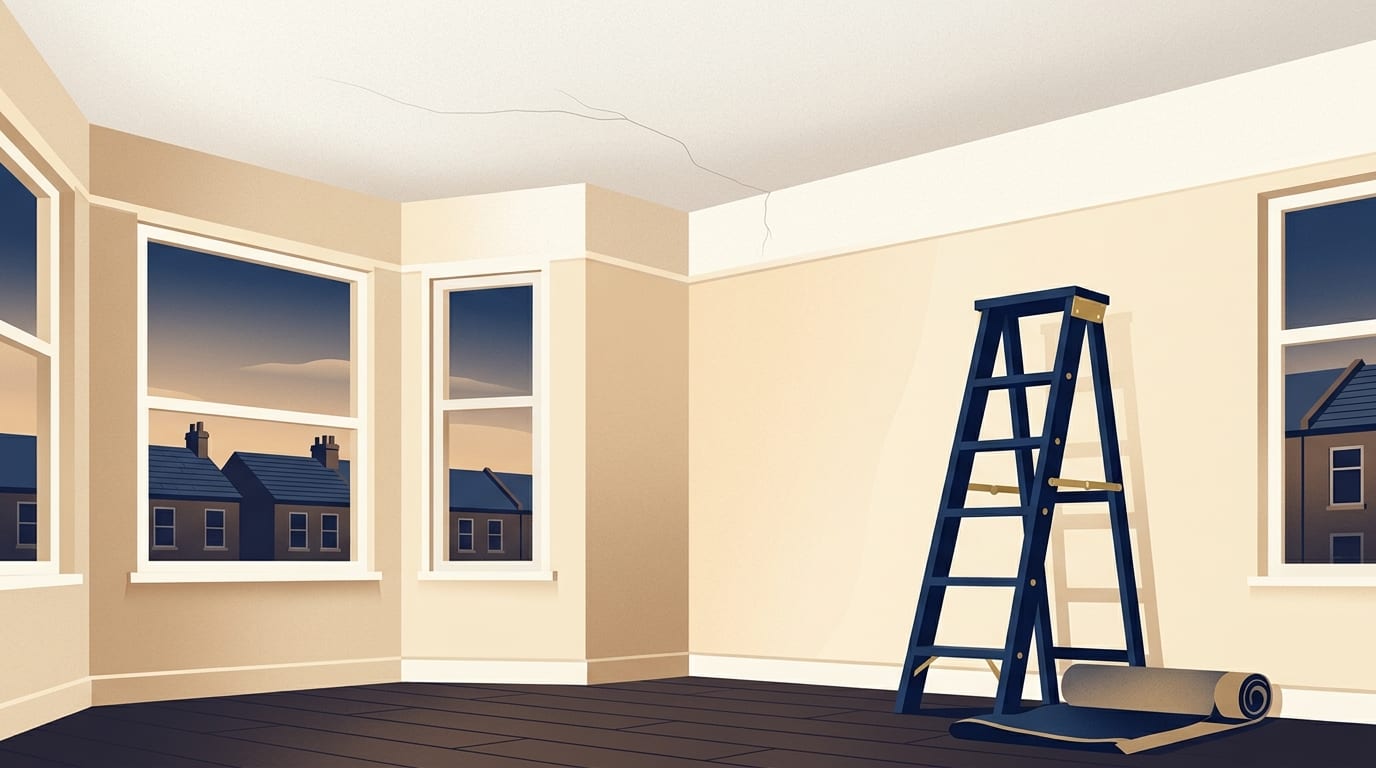
A sagging plaster ceiling should be treated as a safety matter until someone qualified has looked at it, though it is not always about to collapse. If the plaster is dipping or bulging, the bond holding it up may be failing. Keep people out from underneath it and call a professional to investigate the damage.
Why a sagging ceiling is taken seriously
When you look up at a smooth ceiling, it is easy to forget how much material is suspended above your head. Older properties usually feature lath and plaster ceilings, which consist of wet lime plaster applied over thin timber strips called laths. According to the finishes and interiors sector trade body, the FIS, timber laths and three coat lime plaster make up the most common historic ceilings in the UK.
These traditional ceilings carry an enormous amount of weight. The FIS Best Practice Guide for the Repair of Historic Ceilings warns of the severe risk to life from extremely heavy lath and plaster ceilings. The FIS guide states that these ceilings are effectively weighing as much as elevated paving slabs, meaning a collapse brings heavy debris down into the room.
Modern ceilings are made from plasterboard, which is a solid core of gypsum sandwiched between heavy paper liners, finished with a thin skim coat of plaster. While plasterboard is lighter than traditional three coat lime plaster, a falling sheet of wet plasterboard is still incredibly heavy and dangerous.
A ceiling stays up because it is physically bound to the timber structure of the house. Survey guidance for home buyers warns that if the plaster is sagging, it is likely to collapse. When enough plaster detaches, there is nothing fixing the plaster to the laths and the plaster layer of the ceiling can collapse.
What makes plaster ceilings sag
To understand why a ceiling sags, you have to look at how it was built. When a plasterer applies wet lime plaster to timber laths, they push the material hard against the wood. The wet plaster squeezes through the narrow gaps between the laths and slumps slightly over the back of the timber.
As it sets hard, these overlapping hooks of plaster form moulded nibs, also known as keys, which are the only thing holding the heavy ceiling in place. Over time, vibrations or water ingress can damage the moulded nibs of the aging plaster.
Other outside forces also shorten the life of lath and plaster ceilings. The FIS notes that water damage, structural alterations and poor maintenance are common culprits. Removing a supporting wall below, altering the floor joists above, or ignoring a slow plumbing leak can all stress the ceiling.
Moisture is another cause in both old and modern ceilings. Water stains, bubbling paint or sagging ceilings indicate moisture getting in, and failed fixings are one reason a sagging ceiling may need to be replaced.
Signs that a ceiling is getting worse
Look at the area from a safe distance without touching it, and do not stand underneath while you do. Typical signs of a failing ceiling are listed below.
The key signs to look out for include:
- Cracks that are deep or spreading across the ceiling surface.
- A hollow sound when tapped, although you should not tap a sagging ceiling yourself.
- Flaking or crumbling plaster dropping onto the floor or furniture below.
- Damp patches or dark stains appearing on the paintwork.
- Uneven areas, which can indicate plaster has started to detach.
Uneven areas can indicate plaster has started to detach, so a ceiling that shows several of these signs at once should be looked at by a professional soon.
If plaster is flaking or crumbling into the room, tell a plasterer or builder promptly. Damp patches or stains are a sign of moisture getting in, which has to be found and fixed before any repair.
What to do straight away
Your first priority is safety. If you spot a distinct bulge or sag in your ceiling, keep people and pets out from underneath it and out of the room. Do not go under the sagging area to move furniture, and ask the plasterer or builder how to deal with anything that is stuck there.
Do not try to investigate the ceiling physically. You must not press, poke, or push the sagging area to see how loose it is. Never hang anything from a dipping ceiling, and do not try to prop it up or fix it yourself.
Survey guidance warns that drilling into a damp ceiling may cause the whole thing to come down on you. If there are damp patches or water stains on the ceiling, the leak has to be found and fixed before any plastering work can happen.
Before repairing the ceiling, the source of the water must be fixed. You will need to call a plumber to check the pipes and radiators in the room above, or a roofer to inspect the tiles and flashing. Do not attempt any leak repairs yourself, and once the water is stopped, leave the ceiling alone until a professional arrives.
Who should look at it
Because a sagging ceiling involves structural weight and potential safety hazards, you need the right professional to inspect it. Plastering is not a licensed trade and there is no legal register, so ask for evidence of past ceiling work from whoever you choose.
The FIS Best Practice Guide states that surveys and diagnosis need to be undertaken by a competent plaster inspector. A specialist plasterer who understands historical building methods and modern load bearing requirements will check the condition of the timber joists, the spacing of the laths, and the type of plaster originally used.
In some cases, the problem goes deeper than the plaster itself. The FIS notes that a competent plaster inspector may need to liaise with a conservator, structural engineer or other specialist. If the timber joists have bowed under the weight of a water leak, or if structural alterations have compromised the floor above, a structural engineer must calculate how to make the structure safe.
If you live in a listed building or a period property with decorative plaster cornices and ceiling roses, a conservator will advise on how to save the original features. Conservation bodies advise repairing original lime plaster where possible and replacing materials like for like.
Repair, overboard or replace
When the plasterer inspects the ceiling, they will suggest one of three routes. The decision depends entirely on the state of the background, the cause of the sag, and how much weight the joists can safely hold.
A full replacement is the most thorough approach. For an old lath and plaster ceiling, the preferred repair is to remove the old plaster and laths, then plaster board the area and re-plaster. Full replacement is also often required where fixings have failed or the ceiling has sagged. Taking down a ceiling creates huge amounts of heavy dust, but it allows the plasterer to inspect the timber joists, remove any hidden rot, and screw fresh plasterboard directly to solid wood.
Overboarding involves leaving the old ceiling in place and fixing new plasterboard directly underneath it, screwing through the old plaster into the timber joists above. Plasterboarding over the old ceiling is less disruptive but adds weight and can hide leaks, damp, rot or woodworm, and overboarding a damaged ceiling can add weight and risk collapse. Whether to overboard or skim a damaged ceiling is for the plasterer to decide after looking at the joists and the state of the old ceiling.
A small plaster patch repair is a price line in the table below, but whether a patch is enough for a sagging ceiling is for the plasterer to decide after inspecting it. If you are unsure which route is safest for an older property, you can read more about whether to repair or replace a lath and plaster ceiling.
Typical 2026 prices
Plasterers price a ceiling job after seeing it in person. The final quote is based on the area in square metres, the ceiling height, how easy it is to access the room, and the amount of preparation required. Small jobs carry a minimum charge to cover the tradesperson's travel and setup time.
The table below shows typical 2026 prices for ceiling repairs and replacements.
|
Type of ceiling repair |
Typical 2026 price range |
|---|---|
|
Small stain with minor plaster damage |
£150 to £300 |
|
Small plaster patch repair |
£150 to £400 |
|
Damaged plasterboard section replacement |
£300 to £800 |
|
Severe sagging or collapsed ceiling repair |
£800 to £2,000+ |
|
Full ceiling replacement (1 to 3 days) |
£800 to £2,500+ |
These figures are typical 2026 prices, and your local quotes will differ. Prices in London and the South East will cost more.
When you compare prices, you must check what the quote actually covers. A quote for a full ceiling replacement should state whether waste removal is included, as a tradesperson who carries waste must be a registered waste carrier. You should also check if the quote includes the cost of materials, floor protection, and whether VAT is added to the final total. For more on pricing, see the overall cost to plaster a ceiling.
Artex and older ceilings
Many older ceilings are covered in textured decorative coatings, with Artex being a widely used brand name. If your ceiling has a textured pattern and is starting to sag, you must treat it with extreme caution.
The Health and Safety Executive (HSE) states that asbestos may be part of any domestic building built or refurbished before the year 2000, including textured decorative coatings. Asbestos fibres are highly dangerous if inhaled, and breaking, sanding or drilling into these coatings releases those fibres into the air.
If your home was built or refurbished before 2000, you must tell the tradespeople about any textured coatings before work starts. The HSE asbestos FAQ clearly warns homeowners not to try to repair or remove any asbestos materials themselves without training.
Work on textured coatings does not normally need a licensed asbestos contractor, but it must be done by people trained to work safely with asbestos. Never attempt to scrape the pattern flat or cut into a sagging textured ceiling yourself.
Questions to ask before work starts
Before you hire a plasterer to tackle a sagging ceiling, you need to understand exactly what they plan to do. Ask these questions to ensure the job is scoped correctly and safely:
- What is the root cause of the sag, and has it been fully resolved?
- What is above the ceiling, and are the timber joists structurally sound?
- Is overboarding or a full ceiling replacement proposed, and why?
- If the house is pre-2000 and has Artex, should a professional asbestos survey be arranged before any work starts?
- Is the price a fixed quote or just a rough estimate?
- Does the quote include materials, floor protection, VAT, and waste removal by a registered carrier?
Under the Consumer Rights Act 2015, work must be done with reasonable care and skill. Citizens Advice suggests getting three written quotes, agreeing a written contract, paying deposits of no more than 25 per cent, and paying by card for added protection.
Common questions
How do you fix ceiling plaster that is starting to dip?
You do not fix it yourself. A dipping ceiling may mean the plaster is losing its hold on the structure above. You must clear the room below, avoid touching or propping the ceiling, and call a competent plaster inspector or structural engineer to assess the damage and recommend a safe repair.
Is plastering a ceiling repair a messy job?
Yes, ceiling repairs generate a lot of dust and debris, especially if an old lath and plaster ceiling has to be pulled down. Ask the plasterer how the room will be protected and how the waste will be removed, and expect significant disruption while the old materials come down.
Can a plasterer just screw a sagging ceiling back up?
No. Driving screws through a sagging ceiling is not a safe fix, and nobody should work under it before it has been inspected. If the old plaster has detached or the plasterboard is water damaged, screws may not hold. A plasterer must inspect the joists, find the root cause, and either replace the damaged section or install a completely new ceiling.
How long does a full ceiling replacement take?
Typical guide figures put a full ceiling replacement at one to three days, though the time depends on the size of the ceiling and the preparation needed.
Next steps
A sagging ceiling is a serious issue, and the right first steps keep people safe until it has been inspected. Use this checklist to move forward:
- Keep all people and pets out from underneath the sagging area, and do not go under it to move furniture.
- Do not touch, poke, drill or attempt to prop up the ceiling.
- If there are signs of moisture, hire a plumber or roofer to fix the leak immediately.
- Contact a competent plaster inspector to diagnose the root cause and specify the repair.
Once you know the leak is fixed and the area is secure, it is time to find a plasterer near you who can inspect the ceiling and advise on the repair.
Find a top rated plasterer near you
1,036 plasterers across the UK, each ranked on their Google rating and the number of reviews behind it. Start with your county: