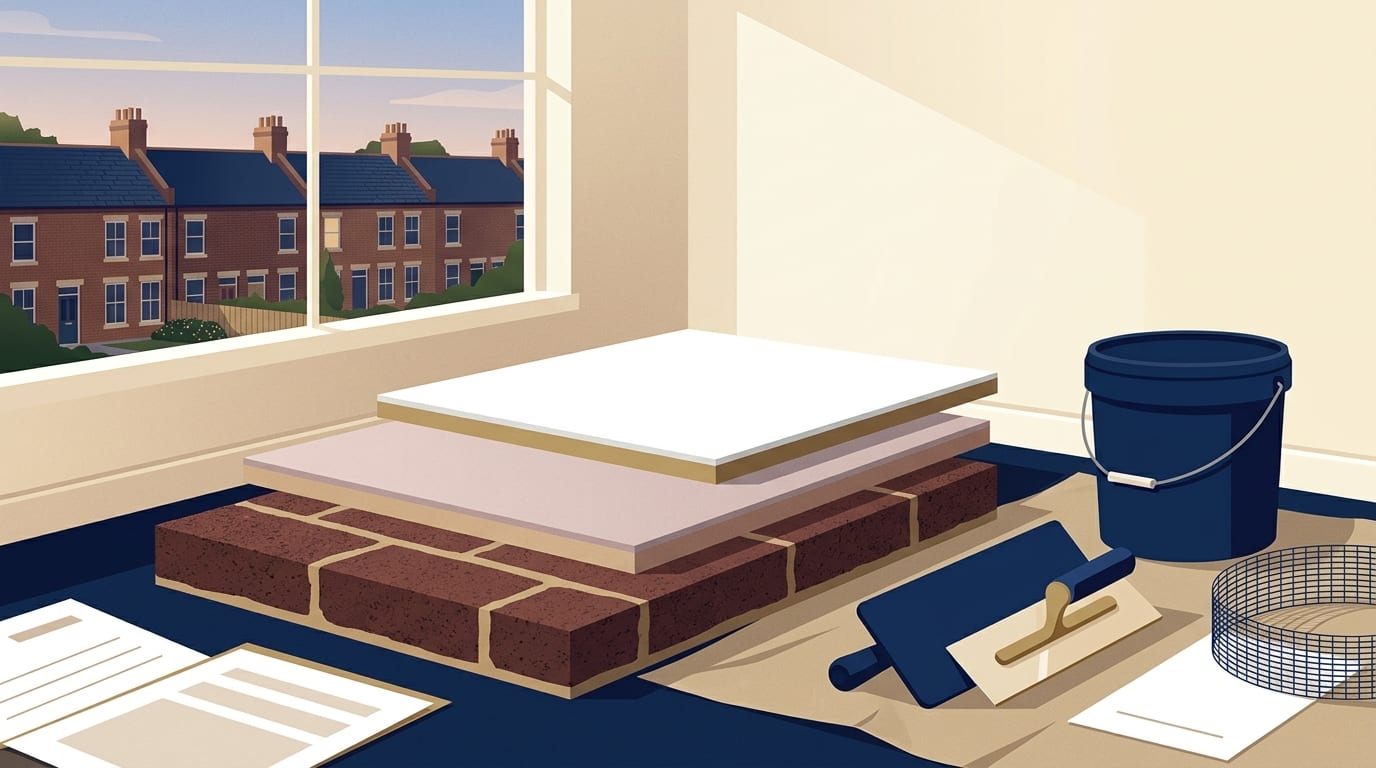
If you are choosing whether to overboard or skim a ceiling, the right choice depends entirely on the state of what is already there rather than on which option is cheaper. The two methods are priced differently, and typical 2026 figures are set out below. The plasterer will need to inspect the existing surface to see if it is sound enough to hold a new coat of plaster or if it needs to be boarded over completely.
Two methods for two different jobs
When a plasterer comes to look at a tired or damaged ceiling, they will propose a fix based on how stable the surface is. You might receive two quotes from different tradespeople suggesting different methods for the exact same room. One might suggest a skim, while another suggests overboarding.
Understanding these two terms will help you work out exactly what you are paying for. Neither method is right for every situation, and they serve different purposes depending on the background surface. A good plasterer will explain why they have chosen one approach over the other after a physical inspection.
Plastering is not a licensed trade. There is no legal register like the one for gas engineers, so evidence of past work matters when you are choosing who to hire. A CSCS card is for construction sites, not proof of quality on domestic work. You need to rely on clear quotes, a firm understanding of the methods and a careful check of their previous customer reviews to tell a skilled plasterer from someone who just owns a trowel.
What skimming a ceiling means
A skim is a thin finishing coat of plaster, usually just a few millimetres thick. It is applied directly over a sound surface, such as existing plaster or new plasterboard. The goal is to create a perfectly smooth, flat surface that is ready for painting or decorating once it has dried completely.
Skimming is suitable when your ceiling is in good condition. The existing plaster must be firmly attached to the ceiling structure above it. It should not be crumbling, sagging or heavily cracked. If the surface is solid and just looks tired or has minor surface imperfections, applying a light coat of plaster onto a surface that is in good condition is usually the right approach.
Because the plasterer is working with the existing surface, the preparation work is minimal compared to a complete replacement. However, if they apply a skim over a surface that is loose, damp or unsealed, the new coat is very likely to crack or peel off.
When the plasterer has finished, the surface should be entirely smooth to the touch with no trowel marks, ridges or waves. You should check the finish in good natural light before paying the final balance. A wavy finish is something you will see every day once it is painted, so it is important to inspect the work carefully.
What overboarding a ceiling means
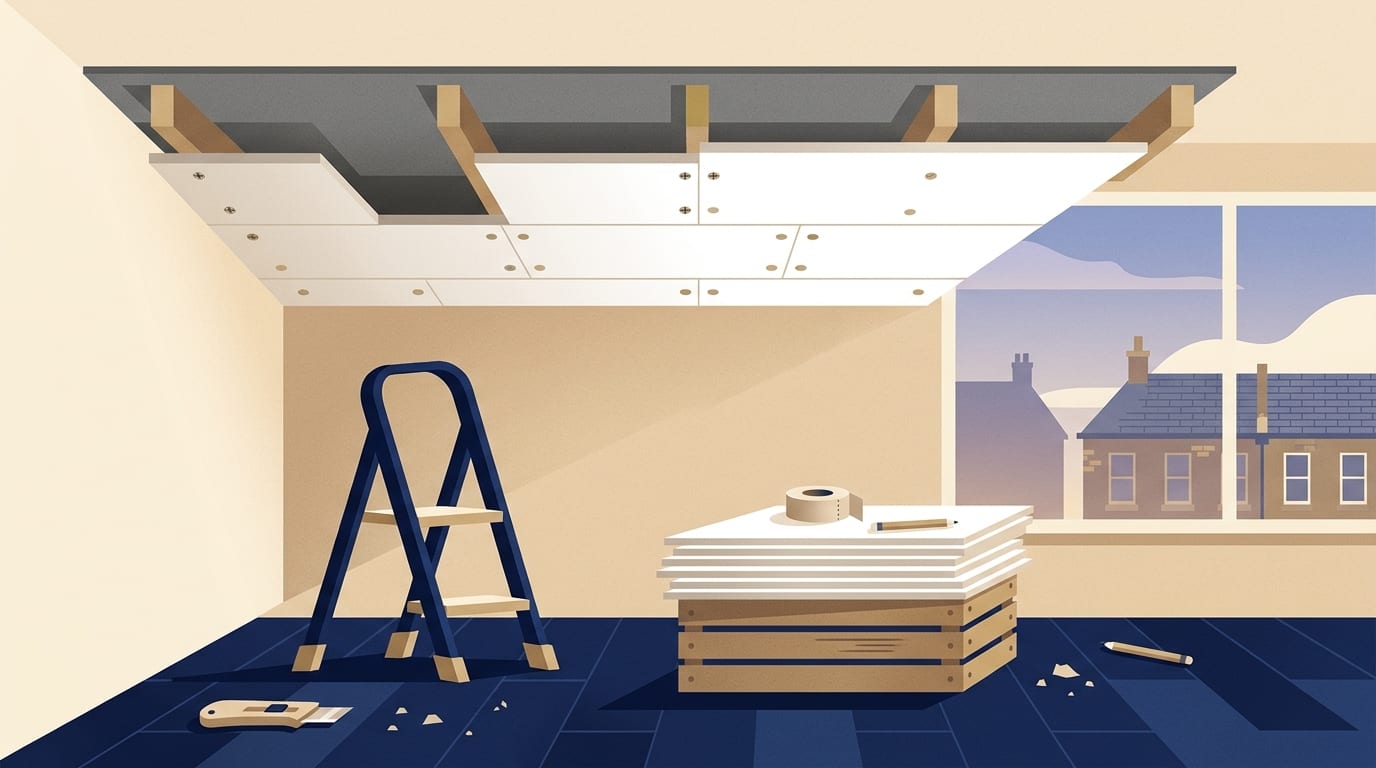
Overboarding means fixing a new plasterboard ceiling over the existing ceiling. The old ceiling stays exactly where it is. The plasterer fixes the new plasterboard over the old ceiling.
Once the new boards are securely fixed in place, the plasterer applies a skim coat over the top of the new plasterboard. This gives you a brand new, perfectly smooth surface. Overboarding avoids the immense amount of dust and mess that comes from removing an old ceiling completely. Pulling down an old ceiling is a dirty job that creates a lot of waste, which then has to be bagged and taken away.
You will likely need this method if your ceiling is sagging, heavily damaged or water-stained. Laying plasterboard over a ceiling covered in Artex is another use of the method. By leaving the old ceiling in place, the plasterer keeps the disruption to a minimum and provides a stable, fresh background for the new plaster.
You might also hear tradespeople mention other methods for different parts of a room. A replaster means hacking off failed plaster and applying a backing coat plus a finish coat, or fixing new plasterboard and skimming it. Dot and dab is plasterboard stuck on dabs of adhesive. Lath and plaster is lime plaster on timber laths, found in older houses. Understanding these terms helps you follow exactly what the plasterer is proposing.
Which one your ceiling needs
The decision between skimming and overboarding comes down to what is happening above your head. A plasterer will inspect the ceiling to see how much weight and moisture it can safely hold before they write your quote.
If a ceiling is sagging, it may mean the fixings or the laths holding the old plaster in place have failed. A plasterer should check this before doing any work. A sagging ceiling is likely to need a full replaster or overboarding rather than a skim, and it is the plasterer's call after seeing the ceiling. If the damage is too severe, a full ceiling replacement might be required, which involves taking the old ceiling down first.
If your ceiling is heavily damaged, a plasterer is likely to propose overboarding or a replaster rather than a simple skim, because skimming suits a surface that is in good condition.
Water-stained ceilings present another challenge. The stain is a clear sign that you need to find the source of the leak and fix it first. Plastering over a wet or actively leaking ceiling will simply ruin the new plaster. Once the leak is fixed and the area is dry, a water-stained ceiling is likely to need a full replaster or overboarding rather than a skim.
Artex and older ceilings
Many homes in the UK have ceilings covered in textured coatings, often referred to as Artex. Dealing with these ceilings requires caution because of the materials used in the past.
The Health and Safety Executive states that asbestos may be part of any domestic building built or refurbished before the year 2000. Textured coatings like Artex from before this date may contain asbestos. Because of this risk, you should not try to repair or remove any asbestos materials yourself. Do not dry sand, scrape or drill into an older textured ceiling.
Before any work begins, the coating should be tested. A sample survey typically costs £200 to £250 and takes about one day to complete. A surveyor takes the samples for a UKAS accredited lab, and a professional survey is advised for several rooms or a damaged coating. Do not scrape or break off a sample yourself. Always tell your tradesperson about the presence of asbestos before work starts.
If the Artex tests positive for asbestos, specialists might suggest encapsulation or overboarding to minimise disruption. This means leaving the Artex exactly where it is and covering it up with new plasterboard. It is usually quicker and cheaper than full removal.
The guide on whether to remove, cover or leave an Artex ceiling covers the options. Typical 2026 prices for boarding over Artex are £400 to £1,000 where the coating is non-asbestos and £450 to £2,000 where it contains asbestos. Plastering over the coating typically costs £250 to £700 (non-asbestos) or £300 to £1,550 (asbestos). The plasterer decides which approach suits the ceiling after seeing it.
Typical 2026 prices
Prices vary depending on the size of the room, the condition of the ceiling and where you live in the UK. Plasterers price per job after seeing it, usually based on the area in square metres, the ceiling height and how easy it is to access the room.
The following table shows typical costs to overboard and skim a ceiling of different sizes.
|
Ceiling size |
Estimated time |
Typical cost (excluding VAT) |
|---|---|---|
|
Small (about 2.1m x 2.2m) |
1 day |
£300 to £950 |
|
Medium (about 3.3m x 3m) |
1 day |
£350 to £1,200 |
|
Large (about 6.1m x 5m) |
1 to 2 days |
£450 to £2,000 |
These are typical 2026 prices from a survey of Which? Trusted Traders, and local quotes will differ depending on your property.
The figures below are not like for like with the table above, so do not combine them with it. A plasterer day rate is typically £200 to £300. A full day of ceiling skimming costs £180 to £240. If you are hiring someone to skim walls and a ceiling together, applying a light coat of plaster onto a surface in good condition typically costs £500 to £1,100.
If the damage is severe and the old ceiling must come down, a full ceiling replacement typically costs £400 to £1,000. If you are dealing with a water leak, a water leak ceiling repair costs £1,400 to £1,700.
Why two quotes can look so different
If you ask three local plasterers for a price, you will rarely get three identical numbers. The final figure depends heavily on how the plasterer has scoped the job and what they have included in their total. Small jobs often carry a minimum charge, and ceilings are usually priced separately from walls.
Location plays a large part in the cost of home improvements. Prices are likely to be at the upper end of the scale, or even more, in London and the South East.
Preparation work also changes the price. A quote that includes moving furniture, stripping old wallpaper, removing loose plaster, sealing painted surfaces and dealing with Artex safely will be higher than a quote from someone who expects the room to be completely empty and ready to go. Putting gypsum or cement on old lime plaster is a common cause of failure, and a good plasterer will factor in the right materials for the background.
You should also check what happens to the waste. A trader who carries waste must be a registered waste carrier, and the register is public. Some quotes include this waste removal, while others leave you to deal with the heavy bags yourself. Floor protection is another detail that is sometimes missed. Skimming is a messy job, and proper heavy-duty floor protection takes time to lay down.
Avoid cash-only deals with nothing in writing. These arrangements leave you with no proof of purchase and no protection if the new skim coat cracks or peels a week later.
Questions to ask before you agree
Under the Consumer Rights Act 2015, all work must be done with reasonable care and skill. If it is not, you can ask for it to be put right or seek a partial or full refund. To protect yourself, it is vital to get the details agreed in writing before any tools are brought into your home.
A quote is a fixed price, whereas an estimate is just a rough guess. Citizens Advice suggests getting at least three written quotes and paying by card where possible. They also state that your quote should include a fixed total price rather than a daily rate, a breakdown of all the work to be done and the materials needed, how long the price is valid for, and whether the price includes VAT.
Before you accept a quote, ask the plasterer these questions to ensure you are comparing like for like:
- Is the supply and fixing of the new plasterboard included in the price?
- How many coats of plaster will you apply to the ceiling?
- Does the price include full floor protection and covering my fixtures?
- Will you take all the waste away, and are you a registered waste carrier?
- Is VAT included in this final figure?
- How long will the job take from start to finish?
If a plasterer asks for a large sum upfront, be cautious. Citizens Advice suggests deposits of no more than 25 per cent. You might also be able to cancel within 14 days of agreeing a contract, depending on how and where it was agreed. Having a written contract protects both you and the tradesperson if there is a dispute later.
Common questions
Can you plaster over a water leak?
You cannot plaster over an active water leak. A water-stained ceiling is a sign that you need to find the source of the problem and have it repaired first. Once the leak is fixed and the area is completely dry, the damaged ceiling will likely need overboarding or replacing.
How long does it take to overboard a ceiling?
Overboarding a small or medium ceiling generally takes one day to complete. A large ceiling measuring roughly 6.1 metres by 5 metres takes one to two days. This timeframe includes fixing the new plasterboard and applying the final skim coat.
Is overboarding used for a cracked ceiling?
It can be. Overboarding puts a new plasterboard ceiling over the existing one, and it is likely to be needed for a heavily damaged ceiling. No method comes with a promise of how a finish will last, so ask the plasterer what they expect after seeing the ceiling.
Do I need building regulations approval to fix my ceiling?
The building regulations rule is about external walls. In England, where 25 per cent or more of an external wall is re-rendered, re-plastered or re-lined internally, the building regulations normally apply and the wall's insulation would normally have to be improved. If you are unsure whether ceiling work is covered, ask your local council. If you live in a listed building, you need consent for any significant work, inside or out.
How do I know if my quote is fair?
The best way to know if a price is fair is to gather several prices for the exact same job. Learning how to compare plastering quotes and spot what is missing ensures you do not get caught out by hidden costs for waste removal, floor protection or materials.
Your next steps
Before you hire someone to tackle your ceiling, take a systematic approach to comparing your options. Use this checklist to keep the project on track:
- Check the current condition of the ceiling to see if it is sagging, water-stained or heavily cracked.
- Identify if the ceiling has a textured coating applied before the year 2000, and arrange a professional survey if it does.
- Get at least three written quotes that are directly comparable.
- Check that each quote is a fixed total price and not just an estimate or a daily rate.
- Confirm exactly what preparation, materials, floor protection and waste removal are included.
- Ask the plasterer to confirm their plan based on what is behind the existing ceiling.
Whether you need a simple skim to freshen up a tired room or a complete overboarding job to hide decades of damage, finding a reliable tradesperson makes all the difference. Take the time to understand your quotes, check the details and find a plasterer near you who can deliver a smooth, professional finish.
Find a top rated plasterer near you
1,036 plasterers across the UK, each ranked on their Google rating and the number of reviews behind it. Start with your county: