You can plaster and render your home during the winter months, but only when temperatures are above freezing and the area is completely free of frost. The exact safe temperature depends on whether you are working inside or outside, and on the specific products your tradesperson uses. Official guidance and trade advice differ, meaning there is no single legal minimum temperature you can rely on. The success of the job comes down to checking the manufacturer limits for the materials and protecting the fresh work from freezing until it sets.
Why cold and frost cause problems
Winter weather introduces moisture and freezing temperatures that can ruin wet trade work. External render comes as sand and cement, lime, pebbledash, monocouche and thin-coat acrylic or silicone systems. K Rend is a manufacturer's brand name often used loosely for silicone render. All of these external finishes rely on a specific curing process to bond to your walls and form a weatherproof barrier.
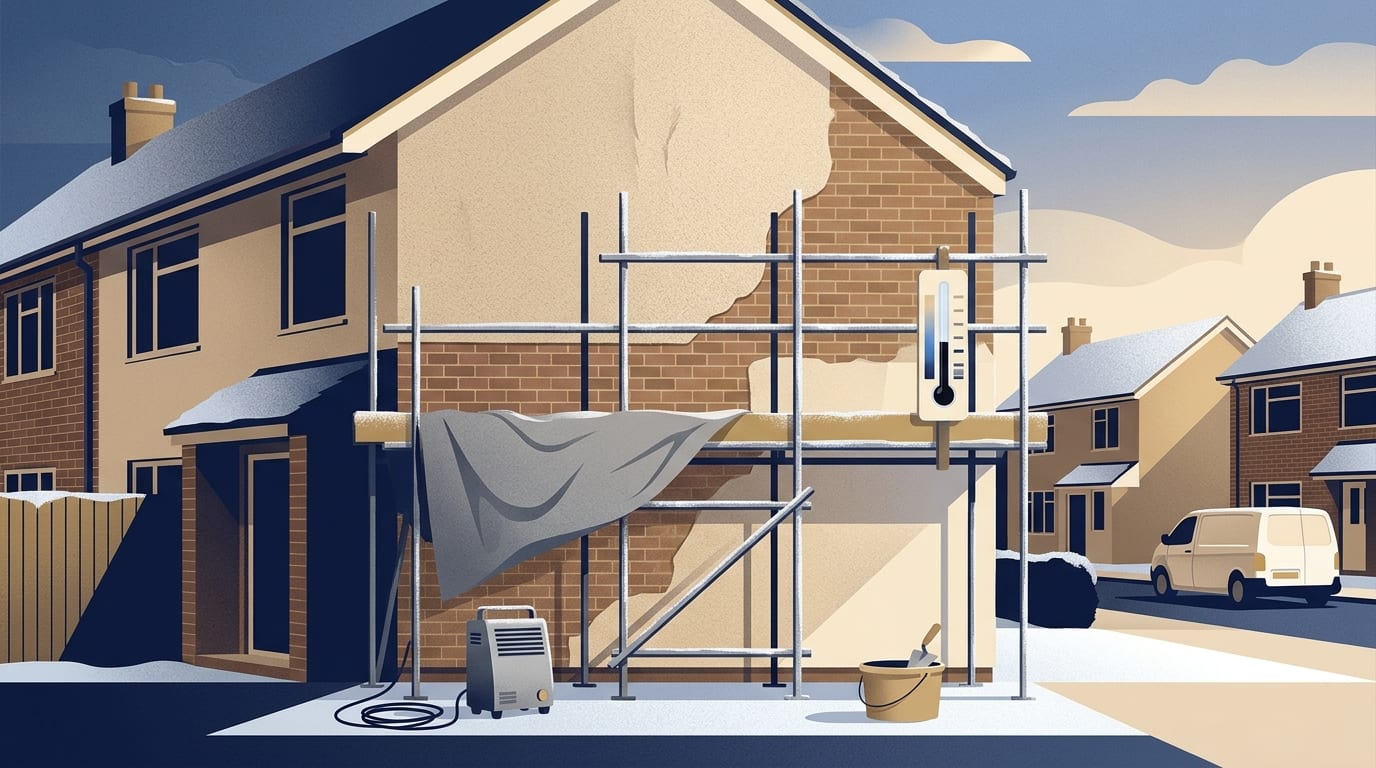
When temperatures drop below freezing, the water inside fresh render freezes and expands. One tradesperson warns that this expansion can cause cracking or shelling as the water thaws. Cold and humid weather also means that drying times are significantly prolonged.
The surface you are covering must also be in the right condition. A wet substrate can cause adhesion problems, meaning the new coat will not stick properly. Render must not be applied onto frozen surfaces, and trade advice is never to apply material to a frozen substrate.
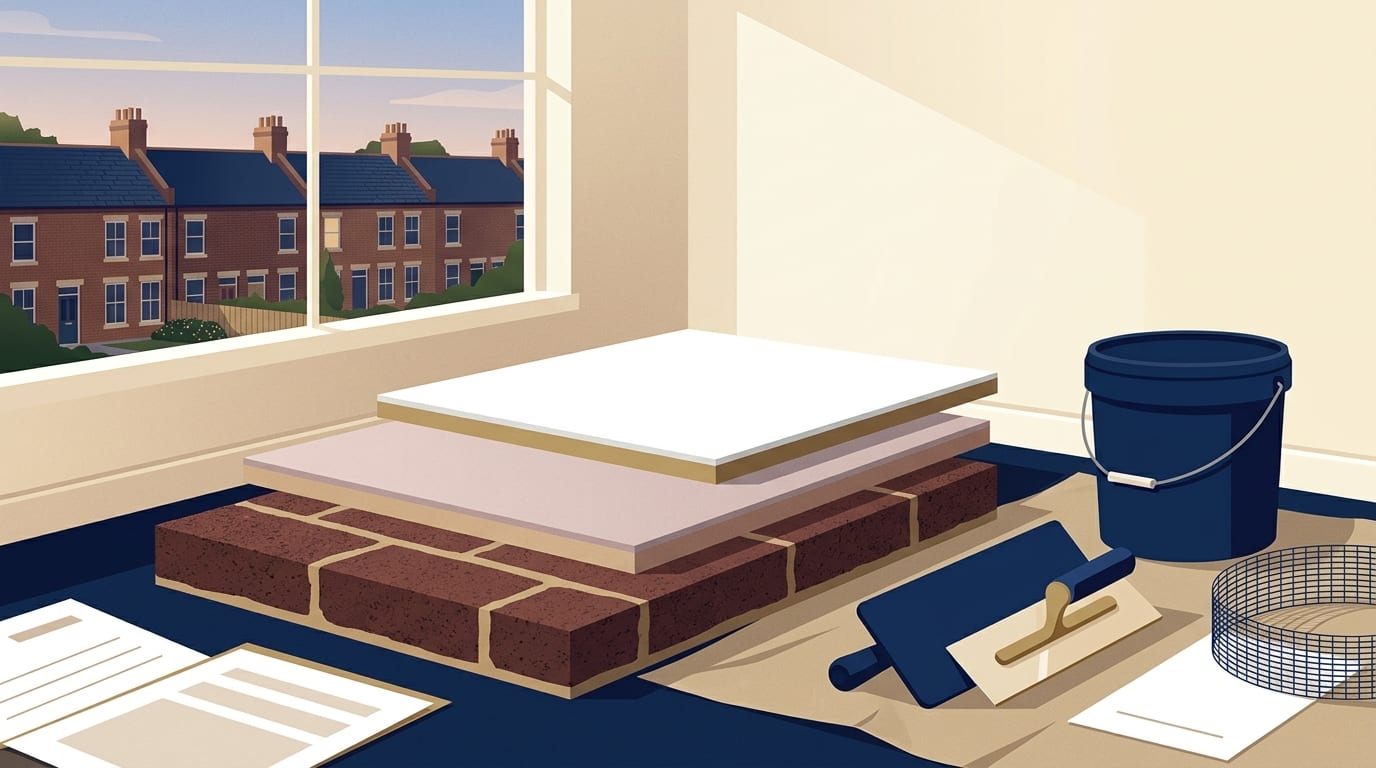
Inside your home, internal plastering faces similar risks. A skim is a thin finishing coat, a few millimetres thick, applied over sound plaster or plasterboard. A full replaster means hacking off failed plaster and applying a backing coat plus a finish coat, or fixing new plasterboard and skimming it, which tradespeople call board and skim. Council building control guidance says no plastering or screeding should take place unless the building is free from frost.
What the guidance says about render
Because there is no single law dictating when tradespeople can work, you must look at the specific limits for the materials being used. For render, different authorities and manufacturers provide varying minimum temperatures. You must treat these as differing guidance rather than a single rule.
One render manufacturer's winter guidance says its cementitious and synthetic products work from 5 degrees to 35 degrees. The guidance states that materials must not go onto frozen surfaces and must be protected from rain or frost for a minimum of 48 hours. It notes that drying is prolonged in winter, and a wet substrate can cause adhesion problems. The same manufacturer states that one specific product can be used as low as 1 degree.
Trade advice for many standard products is that 5 degrees is the minimum application temperature and you must never apply material to a frozen surface. Fresh render should not be exposed to freezing conditions while it is setting. The same advice notes that freshly applied material may need protection from rain and snow.
A council building control note says render should only be finished if the outside temperature is at least 2 degrees and rising with no frost in the construction. It advises that where possible, you should not render when freezing weather is expected before adequate curing takes place, and frozen materials should never be used.
Individual tradespeople gave different thresholds. One said work is fine as long as there is no frost and the temperature is above 5 degrees. Another said not below 2 degrees and mostly dry weather. One would not touch a rendering job between early December and the end of February. These answers differ, so do not treat any one as a rule.
What the rules say about internal plastering
Working inside offers more control over the environment, but the space must still meet strict conditions. A council building control note states that no plastering or screeding should take place unless the building is free from frost. The structure itself should be pre-heated before any internal plastering begins.
Inside the house, tradespeople use different methods to cover walls and ceilings. Dot and dab is plasterboard stuck on dabs of adhesive directly to bare brick or blockwork. Overboarding is new plasterboard fixed under an old ceiling to hide damage or unwanted Artex without pulling the old ceiling down. The council's frost rule for plastering applies to the skim over either method.
Internal heating is allowed during the work, but heaters should not produce excessive vapour. Adequate ventilation should be provided so that moist air can escape. Ask your plasterer what heating and ventilation they plan to use, and do not add heaters of your own that put a lot of moisture into the air.
Why minimum temperature advice differs
You will hear different temperature limits depending on who you ask. Plastering is not a licensed trade. There is no legal register like the one for gas engineers, so evidence of past work matters more than a uniform set of legal rules.
A CSCS card is for construction sites, not proof of quality on domestic work. The trade body for the finishes and interiors sector is FIS, while TrustMark is the government-endorsed quality scheme. Ask which limits the tradesperson is following.
Limits differ by product. One manufacturer says one of its products can be used as low as 1 degree, while others give 5 degrees and a council note says 2 degrees and rising. Check the exact product specification, and ask what will happen if the forecast changes.
Drying and curing times during winter
Cold and humid weather means that both plaster and render take much longer to dry. A skimmed room is typically ready for a mist coat in 3 to 7 days, with full drying up to 2 weeks. For finishing plaster, a week or two to dry fully is also given, and a general rule of thumb is that plaster takes up to 4 weeks. The exact drying time depends on ventilation and weather conditions, and a heater or an open window can help.
For external work, a full render system takes 4 to 6 weeks to fully cure and dry. There is about two weeks of variation in this timeframe depending on the weather. A silicone render takes approximately 12 to 48 hours to dry, but this is longer in colder or more humid conditions. Too much direct heat can make render dry too quickly and crack.
If you are painting older properties, specialist finishes require more time. Lath and plaster is lime plaster on timber laths, found in older houses. Painting lime render needs a minimum of 8 degrees day and night during painting and drying. It requires about 4 weeks of curing for every 5 millimetres of render thickness.
This table shows the temperatures that apply. They differ and are not a single rule.
|
Guidance from |
Minimum temperature |
Key condition |
|---|---|---|
|
Render manufacturer (working temperature) |
5 degrees to 35 degrees |
Must not go onto frozen surfaces |
|
Render supplier |
5 degrees |
Fresh render not exposed to freezing conditions |
|
Council building control |
2 degrees and rising |
No frost within the construction |
These figures differ, and there is no single legal minimum temperature to rely on.
This table compares typical drying times for different materials during the colder months.
|
Material |
Typical drying time |
Key factor |
|---|---|---|
|
Skim ready for mist coat |
3 to 7 days |
Depends on ventilation and weather |
|
Finishing plaster |
A week or two |
Ventilation speeds drying |
|
Plaster, general rule of thumb |
Up to 4 weeks |
A heater or open window can help |
|
Specialist lime plaster |
Up to a month |
Ventilation speeds drying |
|
Full render system |
4 to 6 weeks |
Varies by about two weeks depending on weather |
These timings are a rough guide only.
How winter weather affects plastering quotes
Plasterers price per job after seeing it. Their quote is based on the area in square metres, the state of the background, ceiling height and access, and preparation work. Preparation includes stripping wallpaper, removing loose plaster, sealing painted surfaces and dealing with unwanted Artex.
Ceilings are usually priced separately and small jobs carry a minimum charge. Render is priced per square metre with scaffolding often listed as a separate line. London and the South East cost more. When reviewing a quote, check whether VAT, materials, waste removal and floor protection are included.
Under the Consumer Rights Act 2015, work must be done with reasonable care and skill. If work is not done with reasonable care and skill, the customer can ask for it to be put right or seek a partial or full refund. Citizens Advice can help with a dispute.
A quote is a fixed price, while an estimate is a rough guess. Citizens Advice suggests getting three written quotes, a written contract, paying deposits of no more than 25 per cent and paying by card. You might also be able to cancel within 14 days of agreeing a contract.
Building regulations and planning permission for winter render
In England, building regulations normally apply where 25 per cent or more of an external wall is re-rendered, re-plastered or re-lined internally. In these cases, the wall's insulation would normally have to be improved.
Rendering needs no permission if materials are of similar appearance to the existing house. However, it does require permission in conservation areas, National Parks, Areas of Outstanding Natural Beauty and the Broads. Listed buildings need consent for any significant work, inside or out. If you are unsure, you should check with your local council.
Waste removal is another legal factor to check before the job begins. A trader who carries waste must be a registered waste carrier, and the register is public.
Signs of a risky plastering or rendering job
Winter weather makes bad plastering practices even more obvious. You can spot a risky job by looking out for these warning signs.
- Accepting cash-only deals with nothing in writing to protect you if the work fails.
- Providing quotes that omit preparation, ceilings, scaffolding or waste removal.
- Applying material to a frozen substrate or working while frost is forming on the wall.
- Skimming over loose, damp or unsealed painted surfaces so the new coat cracks or peels.
- Applying gypsum or cement on old lime walls.
- Dry sanding or scraping Artex.
Preparation work on older ceilings carries specific risks that you must manage safely. The HSE says textured coatings such as Artex may contain asbestos in any building built or refurbished before 2000. Work on them does not normally need a licensed contractor but must be done by people trained to work safely with asbestos.
Homeowners should not sand, scrape or drill suspect coatings and should tell tradespeople about them before work starts. Dry sanding or scraping Artex can be a serious health hazard if it contains asbestos. Ask a trained professional before any work on it. If you are working on an older property, conservation bodies advise repairing original lime plaster where possible and replacing like for like.
Questions to ask before booking winter work
Before you agree to a winter start date, ask the tradesperson these questions to ensure they have a safe plan for the cold weather.
- What temperature is the product rated to?
- What will you do if frost is forecast?
- How long will you protect the fresh work?
- Is there a guarantee and does a weather delay affect it?
- Will you tell me if you need to pause the job?
Common questions
Does a heater help plaster dry faster?
Internal heating is acceptable and can speed up drying, but heaters should not produce excessive vapour. You must also provide adequate ventilation to allow the moisture to escape, so that moist air can escape. Too much direct heat can make render and plaster dry too quickly and crack.
Can you paint render in the winter?
Check the paint maker's guidance for the product you plan to use. For lime render, one paint maker says a minimum of 8 degrees day and night is needed during both painting and drying.
Do you need planning permission to render a house?
In England, rendering needs no permission if materials are of similar appearance to the existing house, but it does in conservation areas, National Parks, Areas of Outstanding Natural Beauty and the Broads. Listed buildings need consent for any significant work, inside or out. The policy in Wales may differ.
What happens if it rains on fresh render?
Freshly applied material may need protection from rain and snow, and one manufacturer states it must be protected from rain or frost for a minimum of 48 hours. Check the forecast before rendering a house in the winter.
Your next steps
If you are planning wet trades during the colder months, follow these steps to protect your property and your budget.
- Check the specific minimum application temperature for the render or plaster your tradesperson plans to use.
- Ask how they plan to protect external work from frost and rain for the first 48 hours.
- Ensure your written quote includes all preparation, waste removal and scaffolding.
- Agree adequate ventilation and heating that does not add excessive vapour, and read about the drying times for fresh plaster indoors.
- Keep an eye on the weather forecast and agree in advance that work will pause if temperatures drop below freezing.
To get started with your winter renovation safely, you can find a plasterer near you to discuss your project and get a written quote.
Find a top rated plasterer near you
1,036 plasterers across the UK, each ranked on their Google rating and the number of reviews behind it. Start with your county: