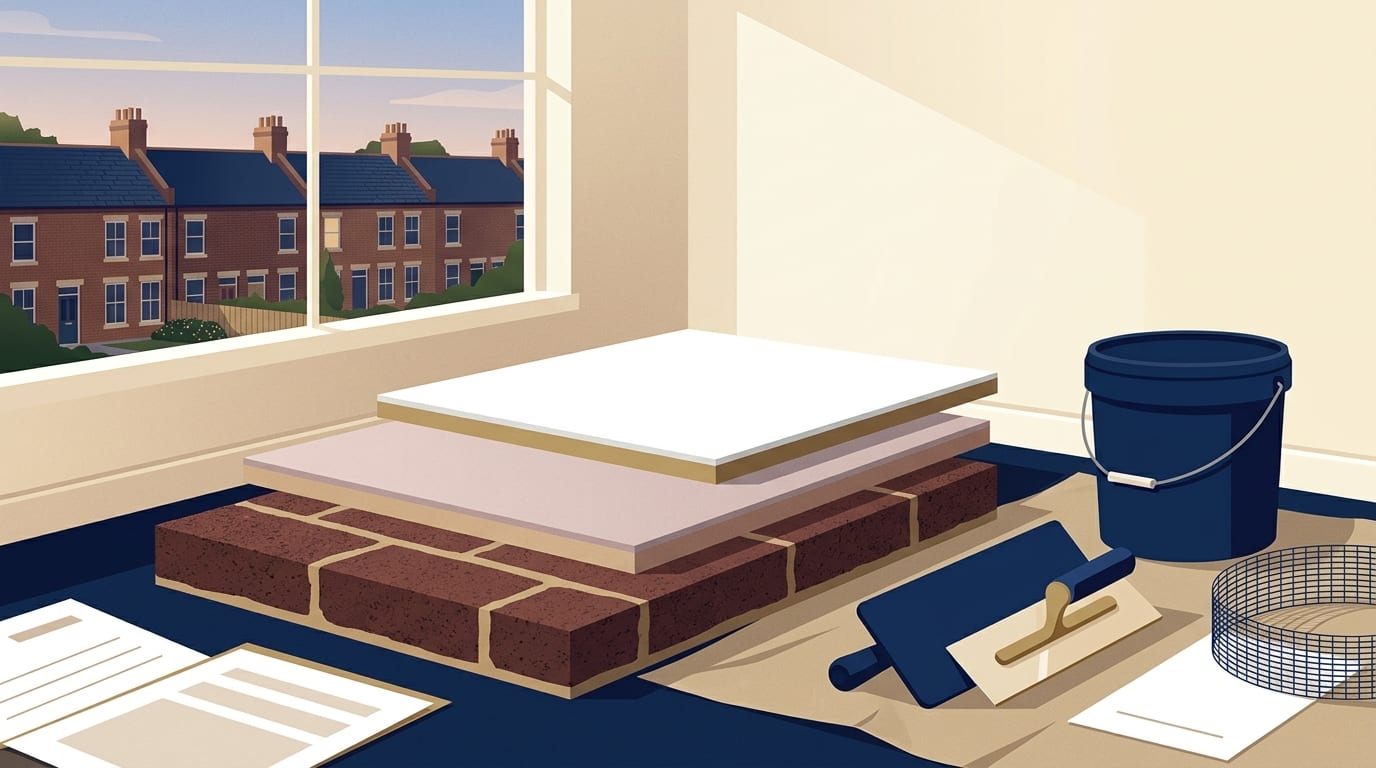
What is a plaster board? It is a flat building sheet manufactured with a solid gypsum core and wrapped in a heavy paper facing. Tradespeople fix these sheets directly to interior timber stud walls, metal frames or ceiling joists to create a flat, stable surface. Once the boards are securely in place, a plasterer will usually apply a skim.
A skim is a thin finishing coat, just a few millimetres thick, spread over the sound plasterboard to create a smooth, seamless surface ready for paint. There are a few different ways to fit these sheets depending on the condition of your property. Dot and dab is a common technique where the plasterboard is stuck directly onto a masonry wall using thick dabs of adhesive. Overboarding is another common method, which involves fixing new plasterboard directly under an old ceiling to hide damage without pulling the old structure down.
If you are dealing with a property that needs a complete overhaul, a replaster means hacking off the failed plaster entirely. The tradesperson will then either apply a traditional wet backing coat plus a finish coat, or fix new plasterboard and skim it. This latter method is known in the trade as a board and skim. You can read more about the differences in the guide to plasterboard or wet plaster.
Standard board for dry rooms
Standard wallboard is the baseline product for interior building work and the most common sheet you will see at a builders' merchant. It is used extensively for internal walls, standard ceilings and stud partitions. Standard board is best for dry environments where there is no risk of steam or dampness affecting the paper face or the gypsum core.
Because it does not contain specialist additives, it is the most cost-effective option for basic renovations in living rooms, bedrooms and hallways. When a plasterer visits your property to price the work, they will base their quote on several factors:
- The total area in square metres
- The height of the ceiling and how easy it is to access
- The state of the background walls
- The preparation required, such as stripping wallpaper or sealing painted surfaces
Ceilings are usually priced separately from walls, and plasterers will apply a minimum charge for very small jobs to cover their travel and setup time. If you are comparing quotes for standard boarding, remember that tradespeople working in London and the South East typically cost more than those in other parts of the UK. You should also check whether the tradesperson has included the cost of materials, VAT, floor protection and waste removal in their total price.
Moisture resistant board for bathrooms and kitchens
Rooms that generate heavy condensation require a different approach to standard living areas. Moisture resistant board is used specifically in bathrooms, kitchens and utility rooms. These sheets contain water-resistant additives, which is why they suit rooms with high humidity.
Using a standard board in bathrooms is not recommended. Standard board in a bathroom is a point to check on any quote before work starts. Under the Consumer Rights Act 2015, any work carried out in your home must be done with reasonable care and skill. If a tradesperson installs the wrong type of board for the environment and the finish fails, you have the right to ask for it to be put right or to seek a partial or full refund.
Because plastering is not a licensed trade, you must check a tradesperson's past work before you hire them. There is no legal register for plasterers in the same way there is for gas engineers. Holding a CSCS card is a requirement for working on commercial construction sites, but it is not proof of quality on domestic household work. Instead, look for tradespeople registered with TrustMark, the government-endorsed quality scheme, or FIS, the trade body for the finishes and interiors sector.
Fire rated board and building control
Fire-rated board is a critical safety material used for garage-to-house walls, stairwells, corridors and compartment walls. It can achieve up to 60 minutes of fire protection with a single 15mm layer in the right system.
The whole system matters, not just the plasterboard. The framing and how the board is fixed and finished form part of the system, so the board alone does not give the rating. A builder or plasterer specifies the correct board, and building control may be involved, so check before work starts.
If you live in a period property with traditional lath and plaster walls, which consist of lime plaster spread over timber laths, you must be careful when upgrading for fire safety. Listed buildings need formal consent for any significant work, both inside and out. Conservation bodies advise repairing original lime plaster where possible and replacing materials like for like. Applying modern gypsum or cement on old lime walls is a common mistake that traps damp. You can find more information about these specific rules by reading about plastering in a listed building.
Acoustic board for sound reduction
Acoustic board is also sold as dense board. It is used for party walls, apartments, bedrooms and offices where sound insulation is required under Part E of the building regulations.
Some specifications use a double layer of board, which adds to both the material costs and the labour time. The plasterer or builder specifies the board and the number of layers for the room.
When a plasterer gives you a quote for acoustic boarding, make sure they have accounted for the condition of the background wall. Fixing heavy boards requires a sound, stable structure. Skimming over loose, damp or unsealed painted surfaces can make the new coat crack or peel, so proper preparation matters.
Thermal and vapour control boards
Thermal boards combine a standard plasterboard face with a thick layer of insulation backing. The insulation materials used are typically EPS, XP and PIR. Plasterers and builders use these insulated boards for external wall linings, solid wall upgrades and general refurbishments.
If your renovation involves thermal boards, you need to be aware of building regulations. Where 25 per cent or more of an external wall is re-rendered, re-plastered or re-lined internally, the building regulations normally apply and the wall's insulation would normally have to be improved.
Vapour control board is a separate product that features a metallised backing layer. The metallised layer reduces vapour transfer. It is used primarily for loft conversions, external wall linings and insulated partitions. If you are upgrading the outside of your property at the same time, note that in England external render needs no planning permission if the materials are of similar appearance to the existing house, but it does require permission in conservation areas, National Parks, Areas of Outstanding Natural Beauty and the Broads.
Thickness and sheet sizes
Plasterboard is manufactured in several different thicknesses, and selecting the right one is essential for the durability of your walls. A 9.5mm board is lightweight and mainly used for selected ceilings, overboarding or curved work.
The 12.5mm board is the standard choice for many domestic walls and ceilings. Thicker 15mm boards are used in systems requiring increased fire, acoustic or impact performance. Anything measuring 19mm and above is for specialist use, often in commercial work, flooring products or multiple layer systems.
The most familiar sheet size for domestic work is 2400mm by 1200mm, which covers an area of 2.88 square metres. These sheets are large and heavy, making them difficult to manoeuvre through narrow hallways or up stairs. Approximate weights for a 2400mm by 1200mm standard board are about 17 to 20kg for a 9.5mm sheet, 22 to 25kg for a 12.5mm sheet, and 27 to 30kg for a 15mm sheet.
Typical 2026 prices for boards and labour
A professional quote will break down the cost of the materials and the labour to fit them. The table below shows typical 2026 UK allowances for a single 2400mm by 1200mm sheet of plasterboard, uninstalled.
|
Board type and thickness |
Typical sheet price |
|---|---|
|
9.5mm standard |
£8 to £12 |
|
12.5mm standard |
£10 to £15 |
|
15mm standard or performance |
£13 to £22 |
|
12.5mm moisture resistant |
£15 to £23 |
|
Acoustic or dense |
£16 to £28 |
|
Impact resistant |
£20 to £35 |
These figures are typical 2026 prices, and local quotes from suppliers will differ. Buying the boards is only a fraction of the cost, as the tradesperson must cut, fit and fix the sheets before any plastering begins. The table below shows typical 2026 UK allowances for the installed cost per square metre, which covers the board and the labour to fit it.
|
Board type and thickness |
Installed cost per square metre |
|---|---|
|
9.5mm standard |
£18 to £26 |
|
12.5mm standard |
£20 to £32 |
|
15mm standard or performance |
£26 to £42 |
|
12.5mm moisture resistant |
£25 to £40 |
|
Acoustic or dense |
£30 to £50 |
|
Impact resistant |
£35 to £55 |
|
Double boarding |
£38 to £70 |
These installed rates are typical 2026 prices, and local quotes will differ based on the complexity of your room. Once the boards are securely fixed, skimming costs £10 to £18 per square metre. If your walls require double boarding to meet sound or fire regulations, this adds £15 to £35 per square metre over the cost of a single layer. Adding insulation behind the boards costs £8 to £25 per square metre.
Preparation and waste removal also add to the final total. Old board or plaster removal costs £8 to £20 per square metre. Waste disposal typically costs £120 to £350. Taking all these factors into account, a 3m by 3m room with walls and ceiling fully boarded and skimmed typically costs £900 to £2,000.
What to ask for on the quote
A common problem when hiring tradespeople is accepting cash-only deals with nothing in writing. If things go wrong, you have no paper trail to prove what was agreed. A quote is a fixed price, whereas an estimate is a rough guess. Citizens Advice suggests getting three written quotes, a written contract, paying deposits of no more than 25 per cent, and paying by card. You might also be able to cancel within 14 days of agreeing a contract.
When you receive a quote, check that it does not omit essential elements like preparation, ceilings, scaffolding or waste removal. Ask the plasterer to detail exactly what they are providing. Your written quote should state:
- Which board type is being used in which room
- The exact thickness of the boards
- The edge type of the boards
- The fixing method to the walls or joists
- Whether waste removal is included in the price
- Whether the final skim coat is included in the price
If the job involves removing old ceilings or textured coatings before boarding, you must address the risk of asbestos. The Health and Safety Executive says textured coatings such as Artex may contain asbestos in any building built or refurbished before 2000. Work on them does not normally need a licensed contractor but must be done by people trained to work safely with asbestos. Homeowners should not sand, scrape or drill suspect coatings and should tell tradespeople about them before work starts. Dry sanding or scraping Artex is highly dangerous and should never happen.
Common questions
What is a plaster board?
It is a flat sheet made of a solid gypsum core sandwiched between two layers of heavy paper. Tradespeople fix it to walls and ceilings to create a smooth, level background. Once it is screwed or glued in place, it is usually finished with a thin coat of skim plaster.
What is the typical price of plaster board?
The price depends on the thickness and the performance rating of the sheet. A standard 12.5mm board costs between £10 and £15 per sheet. Specialist materials cost more, with a 12.5mm moisture resistant board priced at £15 to £23, and heavy acoustic boards ranging from £16 to £28.
Can you use standard board in a bathroom?
Using standard board in a bathroom is not recommended. Moisture resistant board is the type used in bathrooms, kitchens and utility rooms, and it contains water-resistant additives. A plasterer or builder should confirm the right board for your room.
What size is a standard sheet of plasterboard?
The most familiar sheet size used in the UK is 2400mm by 1200mm, which covers exactly 2.88 square metres. Depending on thickness, a standard sheet weighs about 17 to 20kg at 9.5mm, 22 to 25kg at 12.5mm and 27 to 30kg at 15mm.
Next steps for your plastering project
Before you agree to a price and book a plasterer, you need to make sure the groundwork is in place. Knowing exactly what board you need and what the final bill includes will help you avoid disputes. If you do run into disputes, point your concerns to Citizens Advice.
- Check if your project requires building control approval for fire or acoustic regulations.
- Ensure any tradesperson carrying waste away from your property is a registered waste carrier, and check the public register to confirm.
- Tell your tradesperson about any old textured coatings like Artex before they start stripping ceilings.
- Ask for a fixed written quote that lists the board type, thickness, preparation work and the final skim.
Once you know the exact specifications for your walls and ceilings, you can find a plasterer near you to view the job and provide a fixed price.
Find a top rated plasterer near you
1,036 plasterers across the UK, each ranked on their Google rating and the number of reviews behind it. Start with your county: