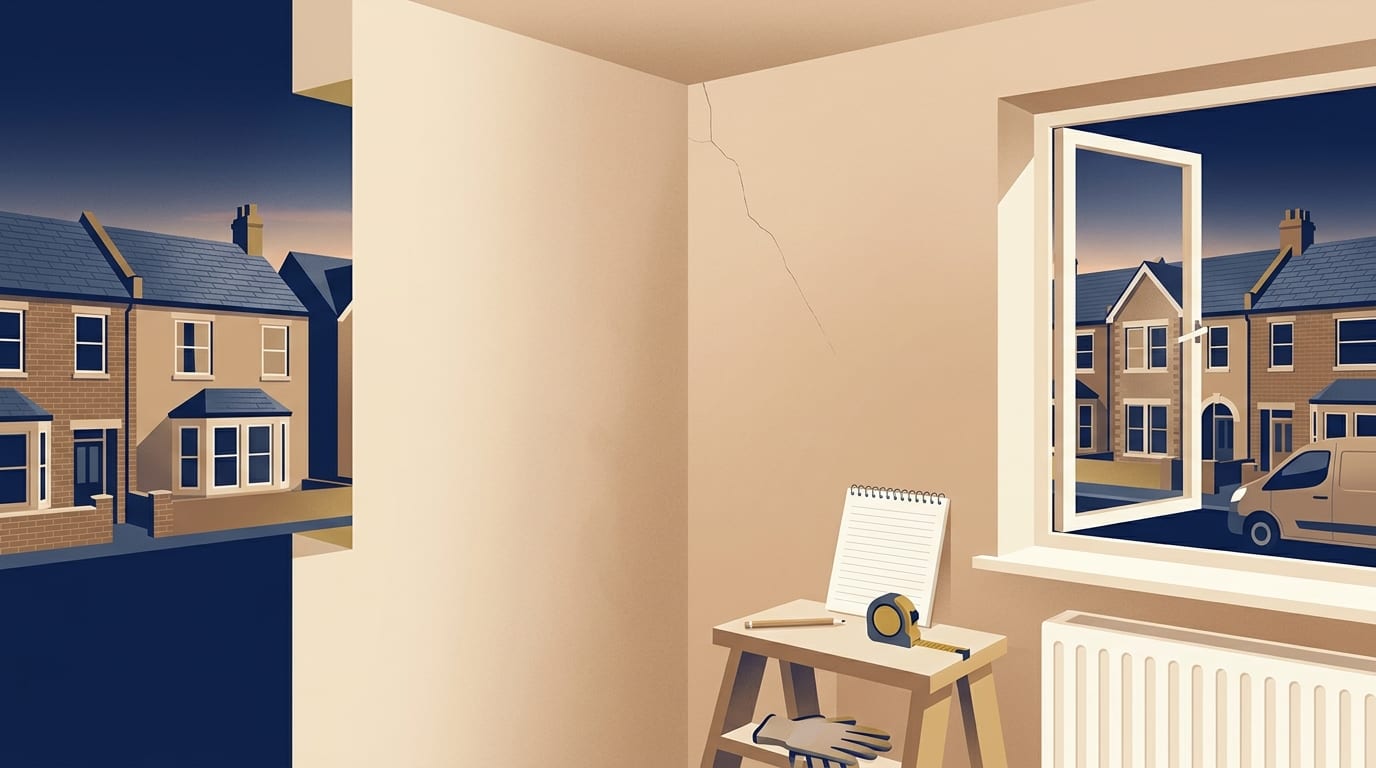
A freshly plastered room introduces a large amount of moisture into your home. Shrinkage occurs during the initial drying out of a home or a newly renovated room. Materials such as mortar, plaster and concrete initially contain a lot of water and can shrink as they dry out. This physical process is completely normal and often leads to fine, hairline cracks appearing on the surface of the walls or ceilings.
Plastering work usually falls into two categories, and both involve wet materials. A skim is a thin finishing coat, a few millimetres thick, applied over sound plaster or plasterboard. A replaster means hacking off failed plaster and applying a backing coat plus a finish coat, or fixing new plasterboard and skimming it. Because both methods rely on water to mix the plaster, that moisture eventually has to evaporate into the air.
As the water leaves the wall, the plaster contracts slightly. NHBC says shrinkage cracks in masonry walls are usually a constant width and normally less than 2mm wide. Finding a few fine lines in the days after the tradesperson leaves is a standard part of the drying process and does not automatically mean the work was poor.
Why new plaster cracks
Seeing a crack on a smooth, newly finished wall is frustrating, but the causes are well understood. Fine cracks in new plaster are linked to normal drying shrinkage, the plaster drying too fast, or excessive heating in the room.
There are other causes that relate directly to how the wall was prepared or the specific materials used by the plasterer. These include:
- Poorly treated plasterboard joints.
- New plaster applied over an unstable surface, such as loose old plaster.
- Movement in the background structure of the house.
The type of backing material also matters. Cement based undercoats shrink when they dry and can crack days or even weeks after application. Applying a finishing plaster before shrinkage is complete makes it more likely to crack or delaminate. Delamination means the top layer separates from the layer beneath it, often leaving a weak finish that sounds hollow when tapped.
Sometimes the problem is the existing surface. Skimming over loose, damp or unsealed painted surfaces can mean the new coat cracks or peels away. If you are dealing with painted walls, plastering over paint or wallpaper carries specific risks that a good plasterer will check for before they start. If fresh plaster goes over old wallpaper or a flaky painted surface, the old layers can lift and take the new coat with them.
If your plasterer was working over textured coatings such as Artex, this requires careful handling. The Health and Safety Executive says textured coatings may contain asbestos in any building built or refurbished before 2000. Homeowners should not sand, scrape or drill suspect coatings and should tell tradespeople about them before work starts. Work on these coatings does not normally need a licensed contractor but must be done by people trained to work safely with asbestos.
What crack widths tell you
Measuring the width of a crack helps you decide whether it is a cosmetic drying issue or something that needs professional attention. Width alone does not show whether a crack is structural, but it serves as a useful guide for what to do next.
The table below shows what different crack widths generally indicate.
|
Crack width |
What it indicates |
|---|---|
|
Generally under 1mm |
Hairline crack |
|
About 3mm or wider |
Needs closer assessment |
|
About 5mm or wider |
Should be assessed promptly |
These widths are rough guide figures and not a diagnosis, so a plasterer needs to see the crack to assess it.
NHBC says that if crack widths are less than 2mm wide, they are unlikely to affect the structural stability of a home, but width alone does not show whether a crack is structural. It also says shrinkage cracks in masonry are usually a constant width, so a crack that keeps growing deserves a closer look.
Cracks at board joints and corners
Homes naturally expand and contract with changes in temperature. Thermal movement cracks are common where an external wall joins an internal plasterboard wall. They also frequently appear where boards are joined on a plasterboard ceiling. Like shrinkage cracks, these are normally less than 2mm wide and are not usually a structural concern.
When a plasterer boards a room, they might use dot and dab, which is plasterboard stuck on dabs of adhesive to a masonry wall. Alternatively, they might do overboarding, which is new plasterboard fixed under an old ceiling. In all these cases, joints in plasterboard are reinforced with joint tape before the skim coat is applied. The tape reinforces the joints.
Poorly treated plasterboard joints are one cause of cracks along the lines of the board edges. Thermal movement cracks can also appear at board joins on a ceiling. A plasterer can tell you which you have.
Heating and ventilation while plaster dries
Fresh plaster takes three to seven days to dry before decorating. You can learn more about how long plaster takes to dry to ensure you do not paint the walls while they still hold moisture.
Published guidance links fine cracks in new plaster to the plaster drying too fast and to excessive heating, so avoid trying to rush the drying with heaters.
NHBC gives these general tips for drying out a home. They are not plastering rules, so follow your plasterer's advice for your own job:
- Use central heating gradually so the structure dries out slowly.
- Try to keep an even temperature in the room rather than turning radiators on full blast and then off again.
- Keep the home ventilated by opening windows slightly to allow the damp air to escape.
How to monitor a crack
If a crack appears, your first instinct might be to fill it immediately. It is best to allow the plaster to fully dry before repeatedly filling and repainting. Filling a crack while the wall is still losing moisture may mean it cracks again.
Monitoring a crack helps you understand if it is a one off shrinkage event or an ongoing problem with movement. To monitor a crack properly, follow these simple steps:
- Photograph the crack clearly in good light.
- Date the photos so you have an exact record of when it looked that way.
- Mark the ends of the crack in pencil directly on the wall.
- Check periodically, including across different seasons, to see if the crack extends past your pencil marks.
Who to call and when
A standard hairline crack under 1mm wide usually does not need a professional and can be dealt with during decorating once the wall is fully dry.
However, some signs point to a failure in the plastering process or a deeper issue with the property. Widespread cracking, hollow areas or cracks that continue to grow should be assessed by a plasterer promptly. Hollow areas should be assessed by a plasterer, because they can mean the new plaster has not bonded to the background. You should also call a plasterer promptly if you notice bulging ceilings or damp patches appearing alongside the cracks.
If structural movement is suspected, a structural engineer should assess it. A plasterer can patch a crack, but they cannot fix a sinking foundation, a failed lintel above a window, or major subsidence.
Repairing a crack in new plaster
A typical repair takes between one and two hours depending on the type of hairline crack. To fix the defect, loose material is removed, the area is filled, sanded, primed and repainted. Wait for the plaster to dry fully before repeatedly filling and repainting.
Rules and regulations for major replastering
If fine cracks turn out to be a total failure of the wall surface, you might need a full replaster. Where 25 per cent or more of an external wall is re-rendered, re-plastered or re-lined internally, building regulations normally apply and the wall's insulation would normally have to be improved.
If the cracking is on the outside of your home, external render comes as sand and cement, lime, pebbledash, monocouche and thin-coat acrylic or silicone systems. K Rend is a manufacturer's brand name often used loosely for silicone render. In England, according to the Planning Portal, rendering needs no planning permission if materials are of similar appearance to the existing house. It does need permission in conservation areas, National Parks, Areas of Outstanding Natural Beauty and the Broads.
If you live in a historic home, lath and plaster is a traditional method using lime plaster on timber laths, found in older houses. Listed buildings need consent for any significant work, inside or out. Conservation bodies advise repairing original lime plaster where possible and replacing like for like. Applying modern gypsum or cement on old lime walls is a common cause of problems, because it can trap moisture.
Talking to your plasterer about a defect
Finding widespread cracks or hollow areas often leads to a difficult conversation with your tradesperson. Plastering is not a licensed trade, meaning there is no legal register like the one for gas engineers, so evidence of past work matters. A CSCS card is for construction sites, not proof of quality on domestic work. If you want reassurance about a firm's background, FIS is the trade body for the finishes and interiors sector, and TrustMark is the government-endorsed quality scheme.
Under the Consumer Rights Act 2015, work must be done with reasonable care and skill. Whether a crack means the standard was not met depends on the cause, and Citizens Advice can help if there is a dispute. If the work is not done with reasonable care and skill, the customer can ask for it to be put right or seek a partial or full refund.
To protect yourself, you should always get a contract in writing before work starts. A written record makes it easier to get what you paid for if the trader does not deliver. Citizens Advice suggests getting three written quotes, a written contract, paying deposits of no more than 25 per cent and paying by card. You might also be able to cancel within 14 days of agreeing a contract. You can read more about dealing with tradespeople and disputes at Citizens Advice.
A quote is a fixed price, while an estimate is a rough guess. A detailed written quote should list all the preparation work, whether ceilings are priced separately, scaffolding and waste removal. If your plasterer removes old plaster, any trader who carries waste must be a registered waste carrier, and the register is public. Avoid cash-only deals with nothing in writing, as quotes that omit preparation or waste removal often lead to unexpected costs and leave you with no proof of what was agreed.
Common questions
When should I worry about cracks in plaster?
You should worry if you see widespread cracking, hollow areas, bulging ceilings, damp, or cracks that keep growing. Cracks about 5mm or wider should be assessed promptly. NHBC says cracks under 2mm wide are unlikely to affect structural stability, although width alone does not show whether a crack is structural.
Why are my newly plastered walls cracking?
The most common reasons are normal drying shrinkage, the plaster drying too fast, or excessive heating in the room. Other causes include poorly treated plasterboard joints, movement in the background, or new plaster applied over an unstable surface.
How do you fix plaster cracks?
A typical repair takes between one and two hours depending on the type of hairline crack. Loose material is removed, the gap is filled, sanded, primed and repainted. It is important to wait for the plaster to fully dry before repeatedly filling and repainting.
Do hairline cracks mean a bad plastering job?
Not necessarily, as shrinkage occurs during the initial drying out of a home and can cause minor cosmetic cracks. However, cracks along board lines can be linked to poorly treated plasterboard joints, and hollow areas should be assessed by a plasterer.
Next steps before you act
Before you try to fill a crack or call your plasterer to complain, take a moment to assess the wall properly.
- Measure the width of the crack to see if it is under 2mm.
- Mark the ends of the crack in pencil and photograph it with a date.
- Wait for the fresh plaster to dry over three to seven days.
- Use central heating gradually and keep the room ventilated.
- Contact a plasterer promptly if the crack is 5mm or wider, or if the wall sounds hollow when tapped.
If you have widespread cracking that needs professional attention, or you are looking to fix a poorly prepared wall, you can find a plasterer near you to assess the damage and provide a detailed written quote.
Find a top rated plasterer near you
1,036 plasterers across the UK, each ranked on their Google rating and the number of reviews behind it. Start with your county: